Tag: music

  • Romanticise Your Life: Find Beauty in Everyday Moments

    Romanticise Your Life: Find Beauty in Everyday Moments

    My Motto for Life: “Romanticise the World”

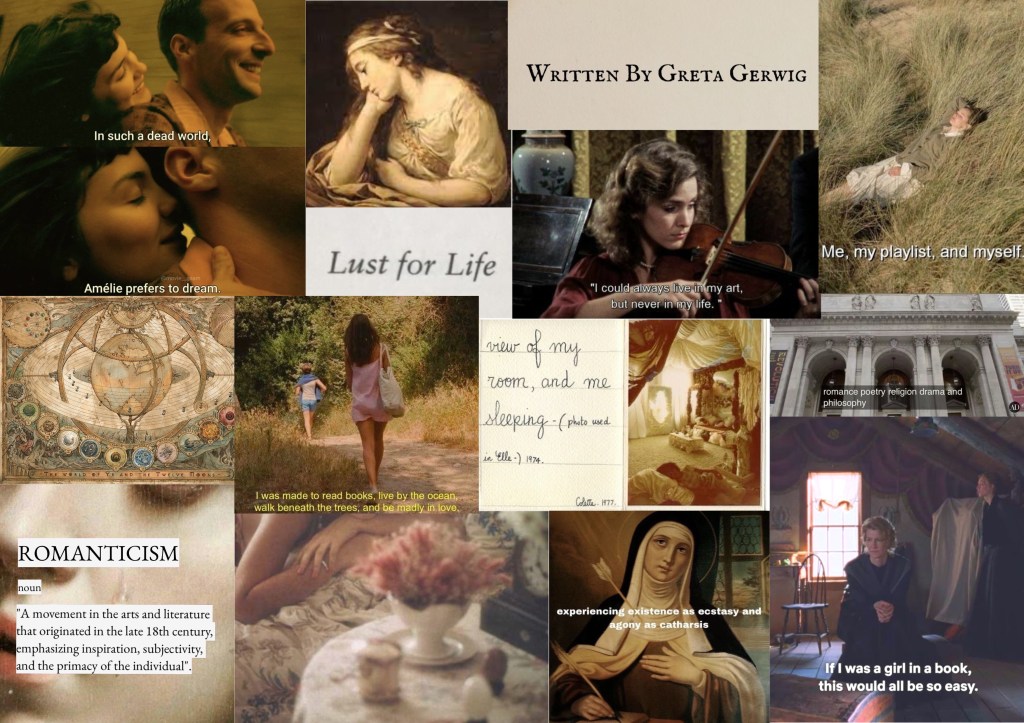
    If there’s one thing I’ve learned in my lust for life is that it’s all about making it feel more like an indie film and a little less like a laundry list of tasks. Life is infinitely better when you romanticise the world. To me, it’s not about ignoring reality but dressing it up a little—finding beauty in the mundane. I’ve always been drawn to the experience of everyday moments—those fleeting, seemingly insignificant instances that hold a quiet magic. A cup of tea steaming on a windowsill, the sunlight on cobblestones, the sound of your favourite song or a sweet scent that somehow makes you think of an old love. Call me sentimental, but I’d rather live as if I’m starring in my own heartfelt montage.

    Sometimes, even sadness has a strange kind of beauty. Melancholy is poetic—it’s the deep breath before you write a tear-stained journal entry or the rain against your window as you watch the world blur. Romanticising these moments doesn’t mean glorifying pain; it’s about finding the thread of beauty in them. It’s turning the gray clouds of your mood into a mood board for something meaningful. Think about the songs you listen to when you’re sad—aren’t they somehow the most beautiful? There’s a reason heartbreak inspires art. Melancholy teaches us to sit with our emotions, to feel deeply, and to reflect. There’s a quiet intimacy in sadness, a rawness that makes us human. It’s in these moments that we often understand ourselves better, that we tap into creativity, and that we can connect with others on a deeply empathetic level. If happiness is the sunlight, then melancholy is the moonlight—subtle, softer, but no less enchanting.

    Whether it’s a perfectly curated Pinterest board or the way you drape a scarf over your shoulder just so, aesthetics matter. They’re not frivolous; they’re how we make the ordinary extraordinary. You’d be amazed at how putting fresh flowers on your desk or lighting a candle can transform the day. Dress up—even if it’s just for yourself. Buy the fancy notebook. Life’s too short to wait for special occasions to make things lovely. The secret? When everything feels like an occasion, the world begins to sparkle.

    What’s a leading lady without her ensemble cast? Friends and love bring color to the grayscale moments of life, and they deserve their own cinematic close-ups. Romanticising your relationships means treasuring the traditions you share—like going to your favourite places together every week or sending secrets at midnight. Love, whether it’s a partner or platonic, is a story worth cherishing. It’s finding poetry in the way someone knows your coffee order or sends you photos of something that made them think of you. 

    Advice: How to Find Beauty in the Mundane

    1. Slow Down: Sometimes beauty hides in plain sight, but you have to stop rushing to notice it. Look up at the trees, watch the clouds, or just admire the way your tea steams in the morning light.
    2. Set the Scene:Create a little theater of beauty in your everyday life. Decorate your bedroom with soft lighting and cozy textures, and surround yourself with curated trinkets that tell your story—a seashell from a past trip, a framed photo, or a little statue that makes you smile. Turn even the most mundane routines into rituals that feel intentional and special.
    3. Look for Small Joys:Notice the quiet wonders around you—a stranger’s unexpected kindness, the satisfying crunch of leaves beneath your feet, chirping of birds in the morning, savoring how soft fabric feels warm and comforting against your skin. Seek out moments that make you pause, breathe, and feel grateful.
    4. Document It: Take photos, keep a journal, or make playlists that capture how a moment feels. Memory fades, but art keeps the beauty alive.

    Life won’t always hand you grand, sweeping gestures, but it will give you endless small moments of wonder if you know how to look for them. Immerse yourself in a story that changes the way you see the world. Devour a book that opens your eyes to new truths and shakes the foundations of everything you thought you knew. Watch a film that lights a fire in your soul, reminding you of the beauty, power, and fragility of the human experience. Here’s to romanticising the world—may your days feel like poetry and your nights like dreams. Now go light that candle.
  • Re-imagining Icons: The Power of Historical Fashion

    Re-imagining Icons: The Power of Historical Fashion

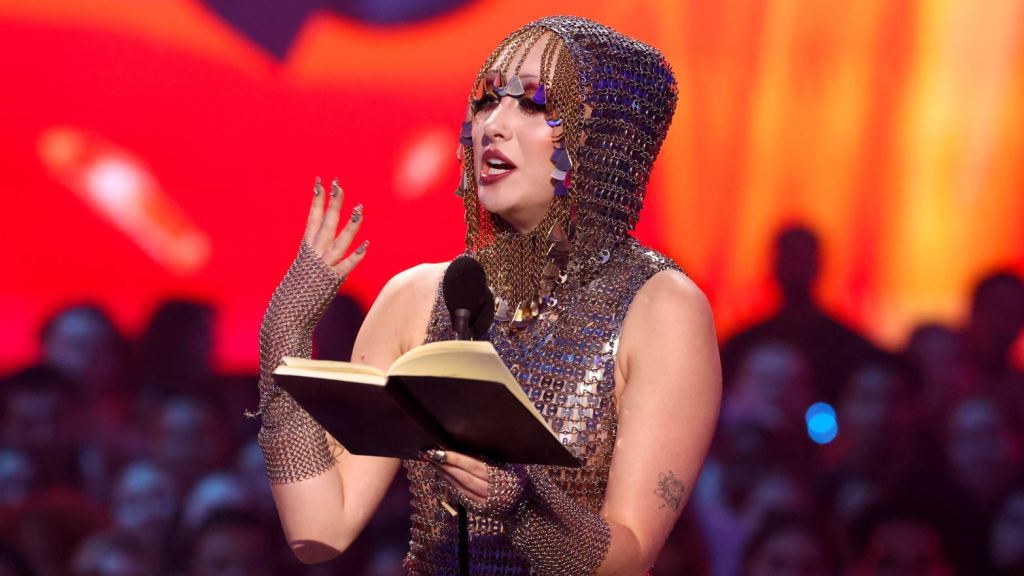
    Rest in Peace Joan of Arc, You would have loved Good Luck Babe by Chappell Roan.

    Dressing as historical figures is a way for celebrities to blend the past with modern-day culture. Connecting their art with well known stories of the women who paved the way before them. This trend allows public figures to embody a character or a historical moment, adding layers of meaning to their look. Here are a few notable instances. 

    Chappell Roan as Joan of Arc at the 2023 VMAs

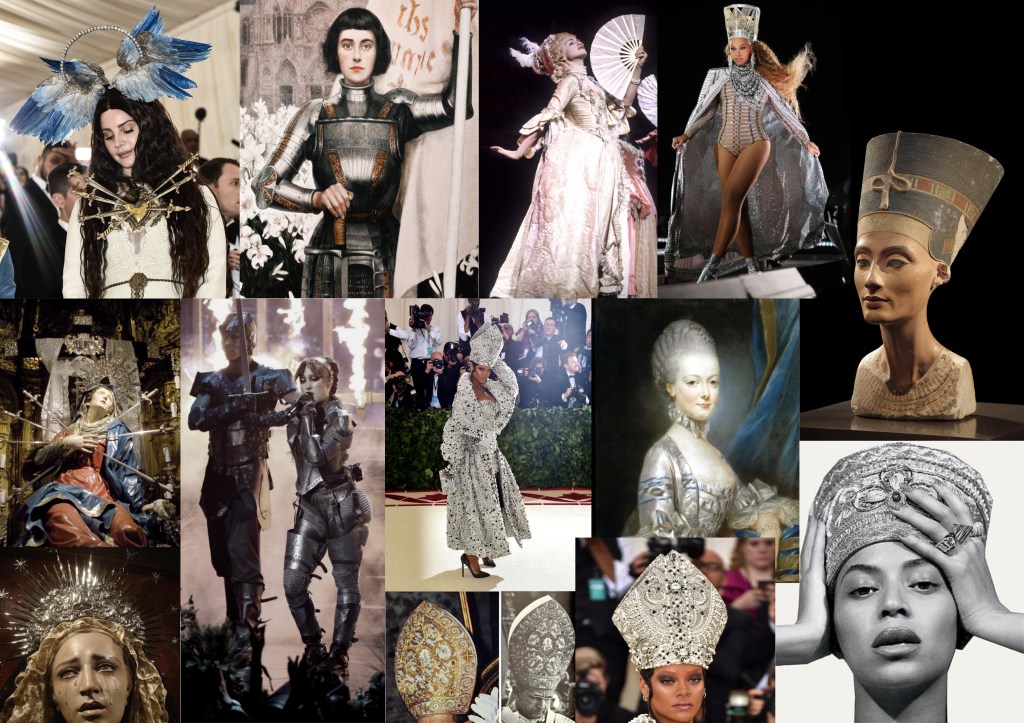
    With Sword in hand and chain mail flowing around her body, Chappell Roan’s appearance at the 2023 MTV Video Music Awards dressed as Joan of Arc featured a modernised armour-inspired outfit. Armour traditionally represents protection and defence, and by wearing it, Roan was symbolising the emotional and psychological armour that one builds to protect themselves. In the context of “Good Luck Babe,” the armour could represent a stark contrast to the vulnerable lyrics at play.  Joan of Arc is often seen as a powerful female figure for taking on a traditionally male role as a soldier and leader. Similarly, Roan wearing armour as a female artist coincides with what she stands for. 

    Rihanna as the Pope at the 2018 Met Gala

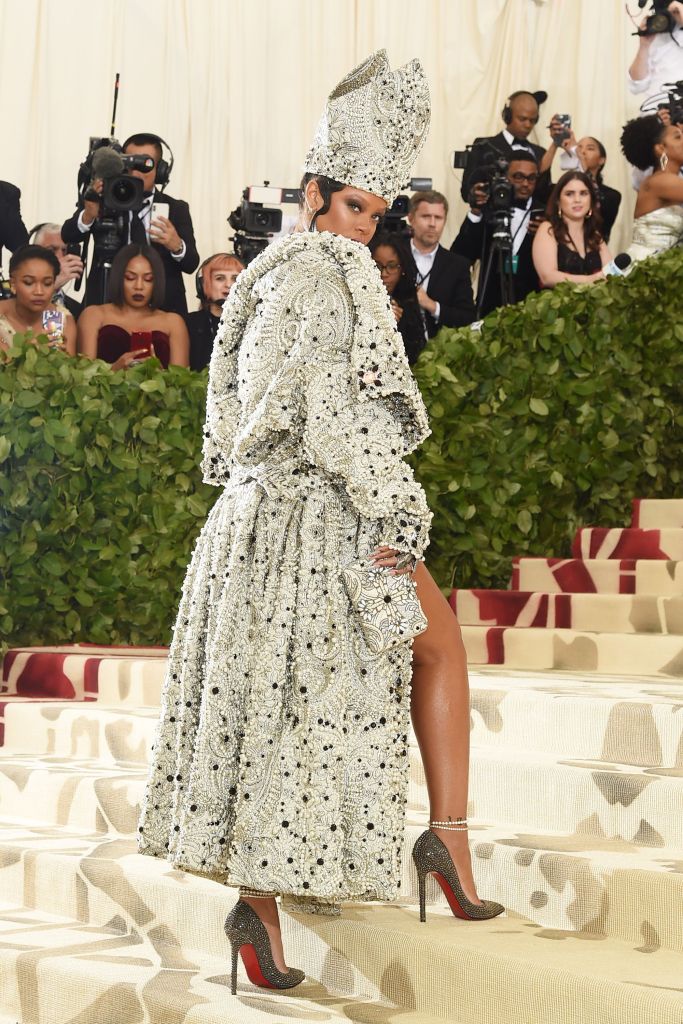
    Rihanna’s 2018 Met Gala look was another distinctive example of red carpet fashion inspired by historical and religious figures. Rihanna was encrusted with custom pearls, crystals, and intricate beadwork from Maison Margiela by John Galliano; she embodied the Pope, complete with a mitre hat. The theme created a space for her to reimagine Catholic iconography through fashion, reflecting both the divinity and the grandeur associated with papal garments. By dressing as the Pope, Rihanna invoked the highest figure of authority in the Catholic Church. The Pope represents religious power, and spiritual leadership. Wearing a papal mitre (the Pope’s ceremonial hat) and a bejewelled robe, Rihanna’s look could be interpreted as an eloquent statement on female empowerment.

    Madonna at the 1990 MTV VMAs as Marie Antoinette

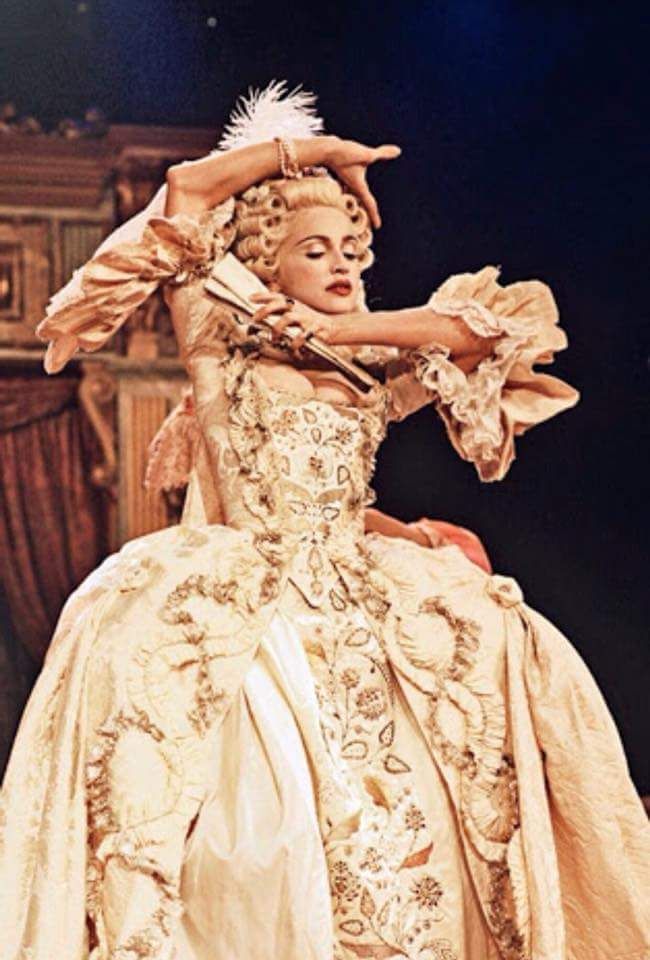
    At the 1990 MTV Video Music Awards, Madonna’s performance of “Vogue” drew inspiration from Marie Antoinette’s courtly fashion. She wore an elaborate wig and gown that referenced the extravagant clothing of the French aristocracy. The performance was a modern take on the 18th-century aesthetic, combining historical elements with pop culture references. Madonna, by embodying this figure, tapped into the image of excess and luxury, aligning herself with the same sense of grandeur. The performance was an assertion of Madonna’s own dominance in the music industry, using the queen’s lavishness to highlight her own cultural influence. Madonna drew a parallel between herself and the French queen, positioning herself as a controversial and rebellious figure. Marie’s reputation for defying court conventions and engaging in scandalous behaviour became part of her legacy. Similarly, Madonna was no stranger to controversy, frequently pushing the boundaries of what was considered acceptable in mainstream media. The performance, with its sensual undertones and provocative nature, was a reflection of how both women were scrutinised and often vilified for their behaviours in the public eye.

    Beyoncé as Nefertiti at Coachella 2018

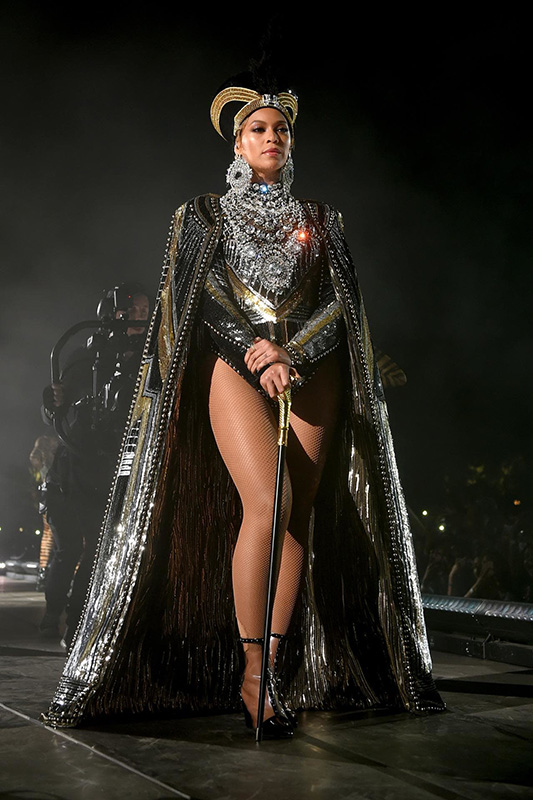
    Beyoncé’s performance at Coachella 2018 paid homage to Queen Nefertiti, the ancient Egyptian ruler, in her costume design. With an enchanting headpiece and regalia reminiscent of ancient Egypt, Beyoncé embodied Nefertiti’s status of  power, heritage, and feminine divinity. Nefertiti, the queen of ancient Egypt, is remembered as one of the most powerful and influential women in history. She ruled alongside her husband, Pharaoh Akhenaten, and was considered a co-ruler, an unusual position of authority for a queen. Beyoncé’s decision to embody Nefertiti at Coachella—one of the most widely watched and culturally significant music festivals—was a way of reclaiming this powerful historical figure. It brought Nefertiti and her African roots into the global spotlight.

    Lana Del Rey as the Virgin Mary at the 2018 Met Gala

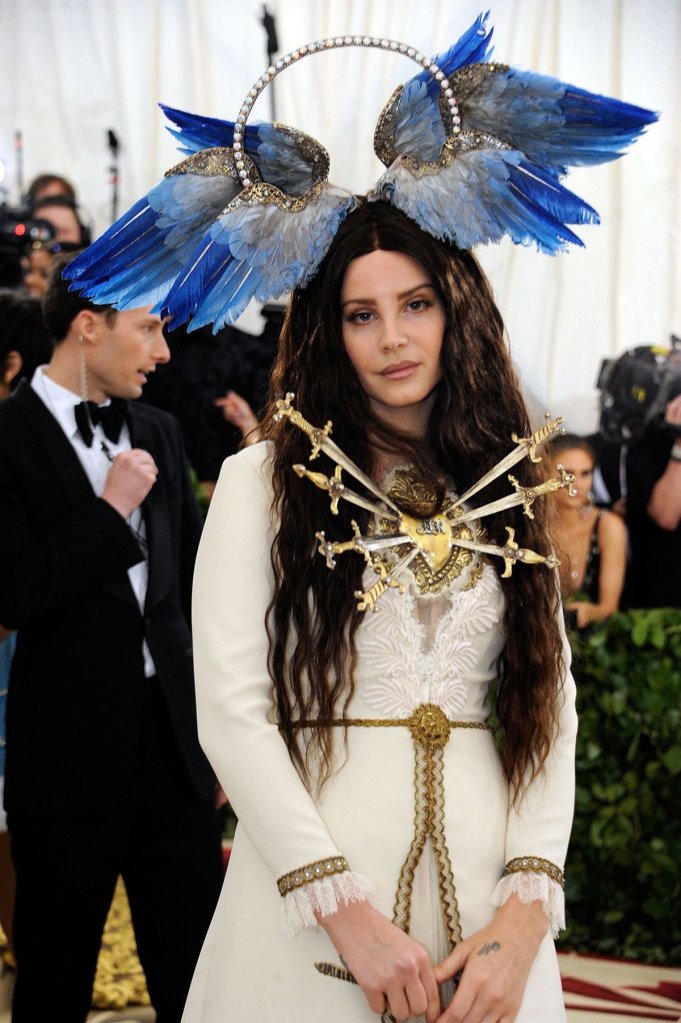
    Lana Del Rey took to the 2018 Met Gala draped in an ornate robe, stabbed with swords, and crowned with feathers, she embodied the Virgin Mary. She wore a custom Gucci gown with intricate detailing of a sacred heart and a headpiece resembling a halo with a golden ray. The Virgin Mary symbolises purity, grace, and divinity, She is also seen as a figure of immense suffering, particularly in her role as the grieving mother of Christ. Lana Del Rey, by embodying the Virgin Mary, highlighted themes that are central to her music, such as spiritual longing, the tension between purity and sin, and the pain of love.  The Virgin Mary, especially in her role as Mater Dolorosa (Mother of Sorrows), is an archetype of feminine suffering. Comparatively, Lana’s lyrical universe is filled with stories of melancholy and longing. 

  • Unveiling Creative Influences: From Gothic Fashion to Ethereal Films and Haunting Paintings

    Unveiling Creative Influences: From Gothic Fashion to Ethereal Films and Haunting Paintings

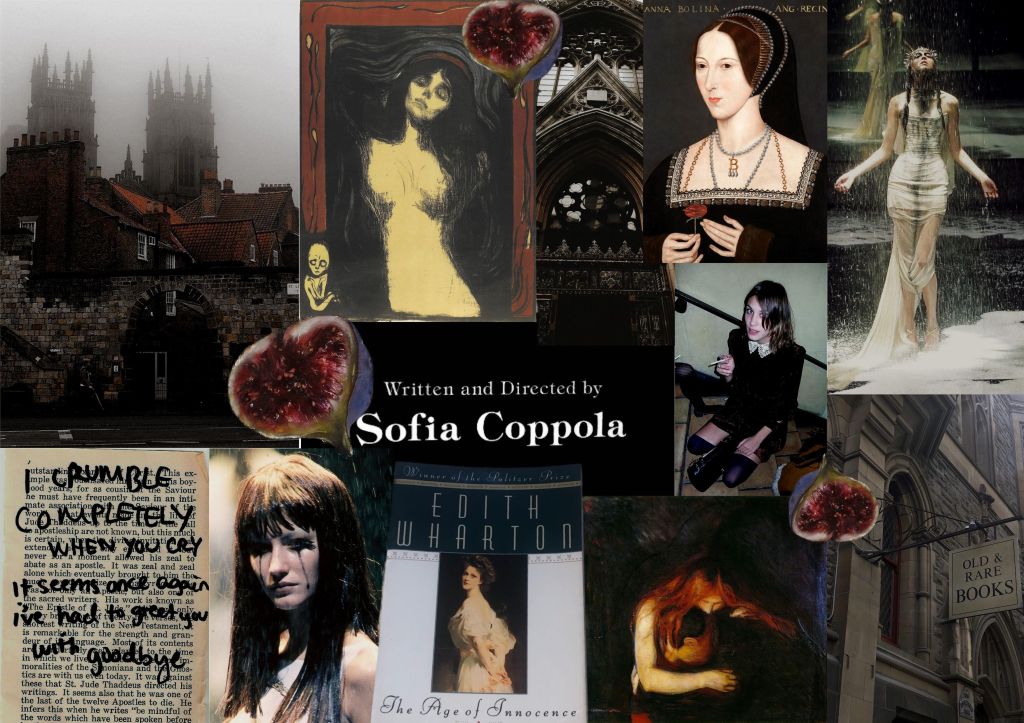
    I saw my life branching out before me like the green fig tree in the story. From the tip of every branch, like a fat purple fig, a wonderful future beckoned and winked. One fig was a husband and a happy home and children, and another fig was a writer, and another fig was a filmmaker, and another fig was a fashion designer, and another fig was England and America and France, and another fig was Austin and Plath and Wharton and a pack of other lovers with queer names and offbeat professions, and another fig was an art director, and beyond and above these figs were many more figs I couldn’t quite make out. I saw myself sitting in the crotch of this fig tree, starving to death, just because I couldn’t make up my mind which of the figs I would choose. I wanted each and every one of them, but choosing one meant losing all the rest, and, as I sat there, unable to decide, the figs began to wrinkle and go black, and, one by one, they plopped to the ground at my feet. 

    The fig tree analogy in The Bell Jar by Sylvia Plath immobilises me at the mere thought of the word “fig.” My tree has been a burden to me since I gained consciousness of the fact I have to be someone. Considering myself an artist in the most pretentious sense of the word, most of my influence stems from England. The music, culture, and gothic architecture constantly having grey clouds overhead, but most notably, the fashion. From travelling exceedingly as a child, my favourite game to play with myself was comparing what the cool girls would wear in each country, constantly analysing styles between the US and UK, and trying to find myself right in the middle, taking pieces from each. My style icon is Alexa Chung, the quintessential British “It Girl.” Her signature style seamlessly fuses British heritage pieces and vintage finds with a modern edge, effortlessly pairing feminine dresses with tomboyish staples like loafers, oversized sweaters, or blazers. She is the type of girl to wear a peter pan collar and Miu Miu ballet flats to the pub. This has made her a muse for designers and a beloved figure in street-style photography. Additionally my fashion designer of choice has always been Alexander McQueen. He frequently pushed the boundaries of traditional women’s fashion, incorporating gothic, romantic, and surreal elements. His collections often feature intricate tailoring, elaborate fabrics, and bold silhouettes that challenged conventional ideas of femininity. McQueen’s designs celebrated the strength and complexity of women, often reflecting themes of empowerment and vulnerability.

    I don’t watch many movies or TV shows. I often say I would rather hallucinate my stories between ink on pages and songs with lyrics that flow in and out of my consciousness. However, some films are able to break through my wall. Storytellers who I allow to make me sit and watch the visual contents of their minds. Sofia Coppola comes to the forefront of thought. Her films focus on themes of isolation, identity, and privilege, frequently depicting young women grappling with existential issues. Coppola uses sparse dialogue, lingering shots, and atmospheric soundtracks to create a sense of emotional distance and melancholy. The mood of her work is often ethereal and intimate, evoking a subtle, quiet beauty. That which encapsulates my being and what I hope to convey to the world.  

    I find myself daydreaming intensely, almost to a fault; music, the soundtrack to my creativity, usually depends on Arctic Monkeys’ lyrics, which often explore themes of youth, nightlife, relationships, and introspection. Alex Turner crafts vivid, frequently witty, and poetic depictions of love, desire, and the complexities of modern life. Their songs are filled with clever wordplay, sharp observations about social dynamics, and a sense of urban realism. Many tracks have a nostalgic or melancholic undertone, blending emotional depth with energetic, guitar-driven sounds. There’s a recurring theme of romance, self-awareness, and reflection on fleeting moments, all wrapped in evocative imagery. 

    I don’t necessarily have a favourite author. I know I am akin to specific genres and believe they have to start giving titles to books in which a young, beautiful girl goes insane due to reacting to her self-inflicted reality and starts taking sleeping pills. Those always resonate: “I understand her.” I think of these characters and keep them close to my heart. May Welland is the central character in The Age of Innocence by Edith Wharton. Who embodies the ideal image of innocence and purity. Although outwardly conforming to societal expectations, she shows subtle strength and determination; despite her seeming naivety, she proves to be more perceptive and manipulative than she first appears. 

    I have always been envious of those who know their favourite piece of art. Mine changes often, though I have always gravitated towards Edvard Munch’s painting “The Vampire,” which depicts a woman with a menacing, almost demonic appearance kissing a man whose head is pressed against her shoulder. The painting is known for its intense emotional impact and unsettling atmosphere. The woman’s gaze is hypnotic and predatory, reflecting themes of obsession and desire. The dark, moody colour palette and dramatic composition contribute to the artwork’s overall sense of dread and unease. I appreciate Edvard’s work.  His expressionist paintings explore themes of anxiety, death, and existential dread. Edvards Munch’s art often reflects his struggles and the psychological depth of the human condition.

    I believe every woman needs an emotional support historical figure. Fortunately for me, I have two. Anne Boleyn symbolises the complex interplay between personal ambition, political power, and religious change in early 16th-century England. Additionally, her life and tragic end have made her a lasting figure in literature and popular culture, embodying themes of love, betrayal, and the struggle for influence. Though I adore how Anne fought for political power, I have a soft spot for Queen Victoria; I always ensure jet jewelry is visible on my body for her. On her wedding day, she wore a white satin gown adorned with Honiton lace, a break from the tradition of colorful bridal dresses. This decision helped popularize white as the standard for brides, symbolizing purity and innocence. In stark contrast, Queen Victoria entered a long mourning period after her husband’s death, Prince Albert. She famously wore black mourning attire for the rest of her life, making the “widow’s black” a symbol of grief and loss. Her mourning dress, austere and somber, became synonymous with the mourning culture of the Victorian era, shaping fashion trends for decades. Her white wedding gown and black mourning dress reflect the intensely personal emotions she associated with love and loss, turning these garments into historical symbols of her life and reign.

    Though I, unfortunately, do not have a British Monarchy to rule or an adaptation of The Virgin Suicides to write up, I find my creative inspiration in an amalgamation of visual art, music, literature, and history, which influence how I perceive and interpret the world. Whether it’s Sofia Coppola’s ethereal films, the Arctic Monkeys’ introspective lyrics, Munch’s haunting paintings, or the complex lives of women like Anne Boleyn and Queen Victoria, I connect gravely with themes of isolation, identity, ambition, and desire. These influences echo my introspections and fuel my constant search for beauty in the melancholy and complexity of life.