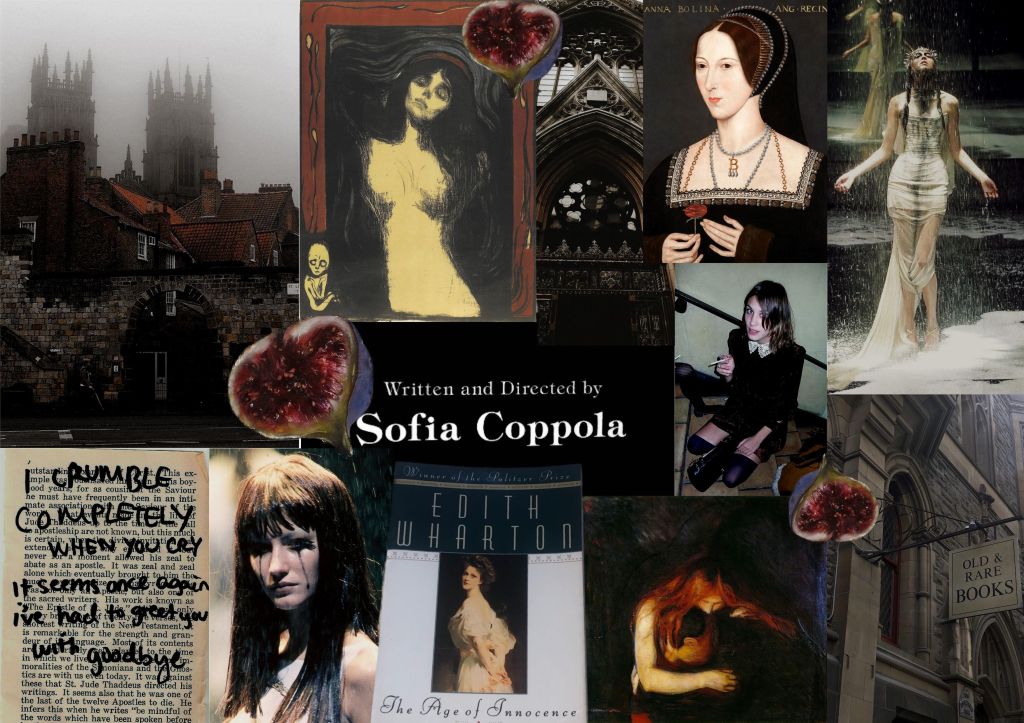
I saw my life branching out before me like the green fig tree in the story. From the tip of every branch, like a fat purple fig, a wonderful future beckoned and winked. One fig was a husband and a happy home and children, and another fig was a writer, and another fig was a filmmaker, and another fig was a fashion designer, and another fig was England and America and France, and another fig was Austin and Plath and Wharton and a pack of other lovers with queer names and offbeat professions, and another fig was an art director, and beyond and above these figs were many more figs I couldn’t quite make out. I saw myself sitting in the crotch of this fig tree, starving to death, just because I couldn’t make up my mind which of the figs I would choose. I wanted each and every one of them, but choosing one meant losing all the rest, and, as I sat there, unable to decide, the figs began to wrinkle and go black, and, one by one, they plopped to the ground at my feet.
The fig tree analogy in The Bell Jar by Sylvia Plath immobilises me at the mere thought of the word “fig.” My tree has been a burden to me since I gained consciousness of the fact I have to be someone. Considering myself an artist in the most pretentious sense of the word, most of my influence stems from England. The music, culture, and gothic architecture constantly having grey clouds overhead, but most notably, the fashion. From travelling exceedingly as a child, my favourite game to play with myself was comparing what the cool girls would wear in each country, constantly analysing styles between the US and UK, and trying to find myself right in the middle, taking pieces from each. My style icon is Alexa Chung, the quintessential British “It Girl.” Her signature style seamlessly fuses British heritage pieces and vintage finds with a modern edge, effortlessly pairing feminine dresses with tomboyish staples like loafers, oversized sweaters, or blazers. She is the type of girl to wear a peter pan collar and Miu Miu ballet flats to the pub. This has made her a muse for designers and a beloved figure in street-style photography. Additionally my fashion designer of choice has always been Alexander McQueen. He frequently pushed the boundaries of traditional women’s fashion, incorporating gothic, romantic, and surreal elements. His collections often feature intricate tailoring, elaborate fabrics, and bold silhouettes that challenged conventional ideas of femininity. McQueen’s designs celebrated the strength and complexity of women, often reflecting themes of empowerment and vulnerability.
I don’t watch many movies or TV shows. I often say I would rather hallucinate my stories between ink on pages and songs with lyrics that flow in and out of my consciousness. However, some films are able to break through my wall. Storytellers who I allow to make me sit and watch the visual contents of their minds. Sofia Coppola comes to the forefront of thought. Her films focus on themes of isolation, identity, and privilege, frequently depicting young women grappling with existential issues. Coppola uses sparse dialogue, lingering shots, and atmospheric soundtracks to create a sense of emotional distance and melancholy. The mood of her work is often ethereal and intimate, evoking a subtle, quiet beauty. That which encapsulates my being and what I hope to convey to the world.
I find myself daydreaming intensely, almost to a fault; music, the soundtrack to my creativity, usually depends on Arctic Monkeys’ lyrics, which often explore themes of youth, nightlife, relationships, and introspection. Alex Turner crafts vivid, frequently witty, and poetic depictions of love, desire, and the complexities of modern life. Their songs are filled with clever wordplay, sharp observations about social dynamics, and a sense of urban realism. Many tracks have a nostalgic or melancholic undertone, blending emotional depth with energetic, guitar-driven sounds. There’s a recurring theme of romance, self-awareness, and reflection on fleeting moments, all wrapped in evocative imagery.
I don’t necessarily have a favourite author. I know I am akin to specific genres and believe they have to start giving titles to books in which a young, beautiful girl goes insane due to reacting to her self-inflicted reality and starts taking sleeping pills. Those always resonate: “I understand her.” I think of these characters and keep them close to my heart. May Welland is the central character in The Age of Innocence by Edith Wharton. Who embodies the ideal image of innocence and purity. Although outwardly conforming to societal expectations, she shows subtle strength and determination; despite her seeming naivety, she proves to be more perceptive and manipulative than she first appears.
I have always been envious of those who know their favourite piece of art. Mine changes often, though I have always gravitated towards Edvard Munch’s painting “The Vampire,” which depicts a woman with a menacing, almost demonic appearance kissing a man whose head is pressed against her shoulder. The painting is known for its intense emotional impact and unsettling atmosphere. The woman’s gaze is hypnotic and predatory, reflecting themes of obsession and desire. The dark, moody colour palette and dramatic composition contribute to the artwork’s overall sense of dread and unease. I appreciate Edvard’s work. His expressionist paintings explore themes of anxiety, death, and existential dread. Edvards Munch’s art often reflects his struggles and the psychological depth of the human condition.
I believe every woman needs an emotional support historical figure. Fortunately for me, I have two. Anne Boleyn symbolises the complex interplay between personal ambition, political power, and religious change in early 16th-century England. Additionally, her life and tragic end have made her a lasting figure in literature and popular culture, embodying themes of love, betrayal, and the struggle for influence. Though I adore how Anne fought for political power, I have a soft spot for Queen Victoria; I always ensure jet jewelry is visible on my body for her. On her wedding day, she wore a white satin gown adorned with Honiton lace, a break from the tradition of colorful bridal dresses. This decision helped popularize white as the standard for brides, symbolizing purity and innocence. In stark contrast, Queen Victoria entered a long mourning period after her husband’s death, Prince Albert. She famously wore black mourning attire for the rest of her life, making the “widow’s black” a symbol of grief and loss. Her mourning dress, austere and somber, became synonymous with the mourning culture of the Victorian era, shaping fashion trends for decades. Her white wedding gown and black mourning dress reflect the intensely personal emotions she associated with love and loss, turning these garments into historical symbols of her life and reign.
Though I, unfortunately, do not have a British Monarchy to rule or an adaptation of The Virgin Suicides to write up, I find my creative inspiration in an amalgamation of visual art, music, literature, and history, which influence how I perceive and interpret the world. Whether it’s Sofia Coppola’s ethereal films, the Arctic Monkeys’ introspective lyrics, Munch’s haunting paintings, or the complex lives of women like Anne Boleyn and Queen Victoria, I connect gravely with themes of isolation, identity, ambition, and desire. These influences echo my introspections and fuel my constant search for beauty in the melancholy and complexity of life.
 Atelier Lauren Jane