Tag: art

  • Navigating the Anti Art Algorithm: A New Era for Artists

    Navigating the Anti Art Algorithm: A New Era for Artists

    In the past, artists struggled against kings, religious dogma, fascist regimes, and economic collapse. Today, they’re up against something far more slippery: the algorithm. It does not burn books or break brushes. It simply buries your work in silence.

    We are living through a seismic shift in how art is seen, shared, and valued. And at the heart of it lies a question that no longer feels rhetorical: What happens to culture when creativity is filtered through code?

    Once, the success of art was determined by its emotional impact—how it moved people, disturbed them, made them think. Now, success is defined by metrics: views, likes, comments, shares, saves. Social media platforms have become the default art galleries of our time, but they are not curated by humans with taste or emotional intelligence. They are ruled by machine-learning models trained to prioritize engagement, virality, and ad revenue. Which means, more often than not, the content that survives isn’t what’s meaningful—it’s what’s marketable.

    This has birthed a new kind of creative anxiety: artists are constantly told they must “play the game” in order to be seen. That game includes packaging their work into ten second videos, trendy music, and caption hooks like “day six of revealing my art until it reaches its target audience…” or “go to part two to see the finished piece…” Not because that’s what their art demands, but because that’s what the algorithm prefers. 

    Perhaps more alarming than invisibility is visibility. Because if your art does go viral, it enters a mass digital critique in the comment section. There was a time when people stood in front of a painting or read a poem and reflected. Now they react. Instantly. Publicly. Often cruelly. Comment sections are no longer forums for discussion—they’re bloodbaths of projection, snark, and rage. No matter what you post—something vulnerable, political, abstract, or simply personal—it is inevitably met with a deluge of mockery, moral policing, or the casual brutality of “this sucks.”

    This is particularly dangerous for emerging or sensitive artists, especially those from marginalized communities. The digital mob doesn’t care about context or creative intent. It thrives on controversy, misunderstanding, and dehumanization. The rise of “hate as engagement” means that outrage is incentivized. There’s no time for people to sit with work, to let it breathe. Instead, they scroll, judge, and move on, often leaving behind a trail of venomous comments that stick to the creator like static electricity.

    The result is a new form of censorship—not the top-down, government-mandated kind, but something quieter and more insidious. Artists begin to self-censor. They avoid risk. They strip their work of complexity or nuance, fearing backlash. Or worse, they create for backlash, because in a system where rage boosts reach, controversy becomes strategy. Art becomes bait.

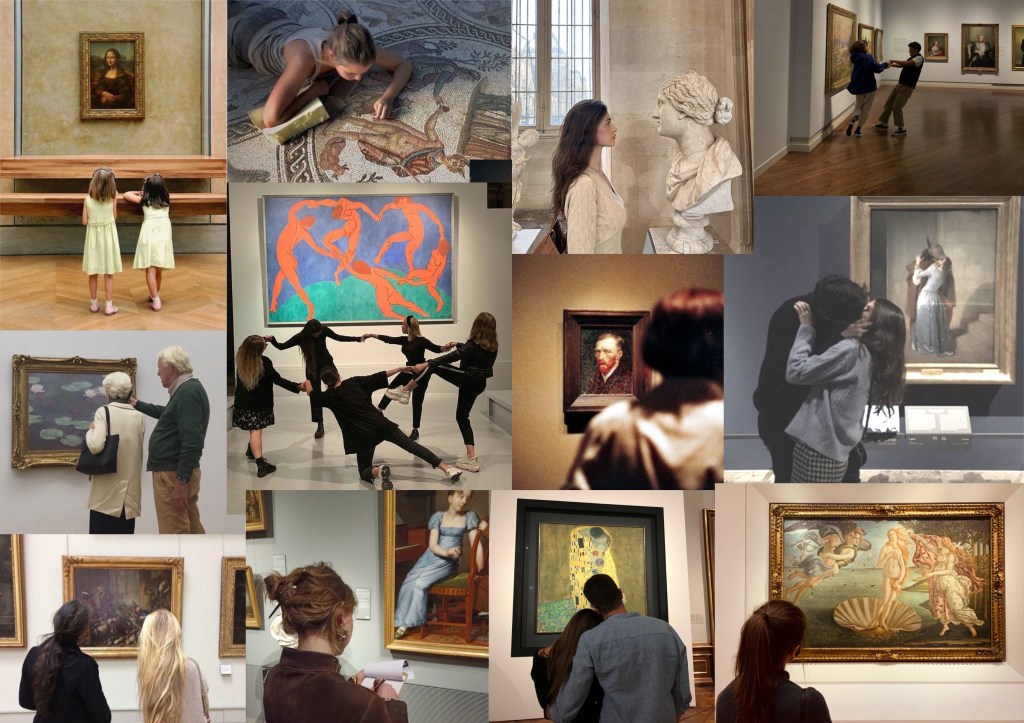
    And yet, what gets lost in this system isn’t just the artist’s intention—it’s our own ability to feel. There is a particular stillness that settles over you when you walk through a gallery—like entering a sacred space where time slows and silence speaks. You don’t just look at a painting; you feel it. The scale, the texture, the brushstrokes—each one pulsing with the artist’s intention, their breath, their labor. You linger longer than you planned, drawn into color, shadow, and suggestion. You tilt your head, lean in, move around the frame. There’s intimacy, presence. You carry it with you.

    But when art is reduced to a glowing rectangle on an iPhone screen, all of that disappears. You scroll past it in a second, barely registering the emotion, and if you do feel something—if a piece reaches you—it’s often crushed beneath comments full of mockery, cynicism, or armchair criticism. Someone will tell you why you’re wrong to love it. And then, just like that, you swipe away, and the feeling vanishes. What could have moved you for years is replaced with the next clip of someone dancing or selling skincare. You forget the art as quickly as you saw it. But the memory of seeing your favorite painting in a museum? That stays. You remember the room, the quiet, the goosebumps. Because no algorithm can replicate the ache of standing before something real.

    We are not meant to consume art like this—in flashes, in fragments, on a screen coated in fingerprints. Art is not designed to be background noise while we wait in line or mindlessly scroll in bed. It’s meant to disturb, challenge, move, comfort, and wake us up. But how can it, when we aren’t allowed to sit with it long enough to even know what we feel? The problem is not that people don’t care about art anymore—it’s that the platforms we use to find it are hostile to slowness, depth, and human connection. They strip away the conditions necessary for transcendence.

    And yet, people still crave art. That’s the paradox. In a world oversaturated with noise, people are starving for something real. But the platforms mediating our access to creativity are fundamentally hostile to the things that make art meaningful: slowness, solitude, struggle, subtlety. The algorithm doesn’t know what to do with a poem that makes you cry for reasons you can’t explain. It cannot quantify the stillness of looking at a painting and feeling your own memories resurface. It cannot measure resonance. It can only track reactions.

    This is the new propaganda: not a loud campaign against art, but a quiet, consistent erasure of its value. It convinces us that if something doesn’t perform, it isn’t worth anything. That beauty must be functional. That artists are only valuable if they are influencers. That the self is a brand, not a vessel. 
  • Female Rage in Art

    Female Rage in Art

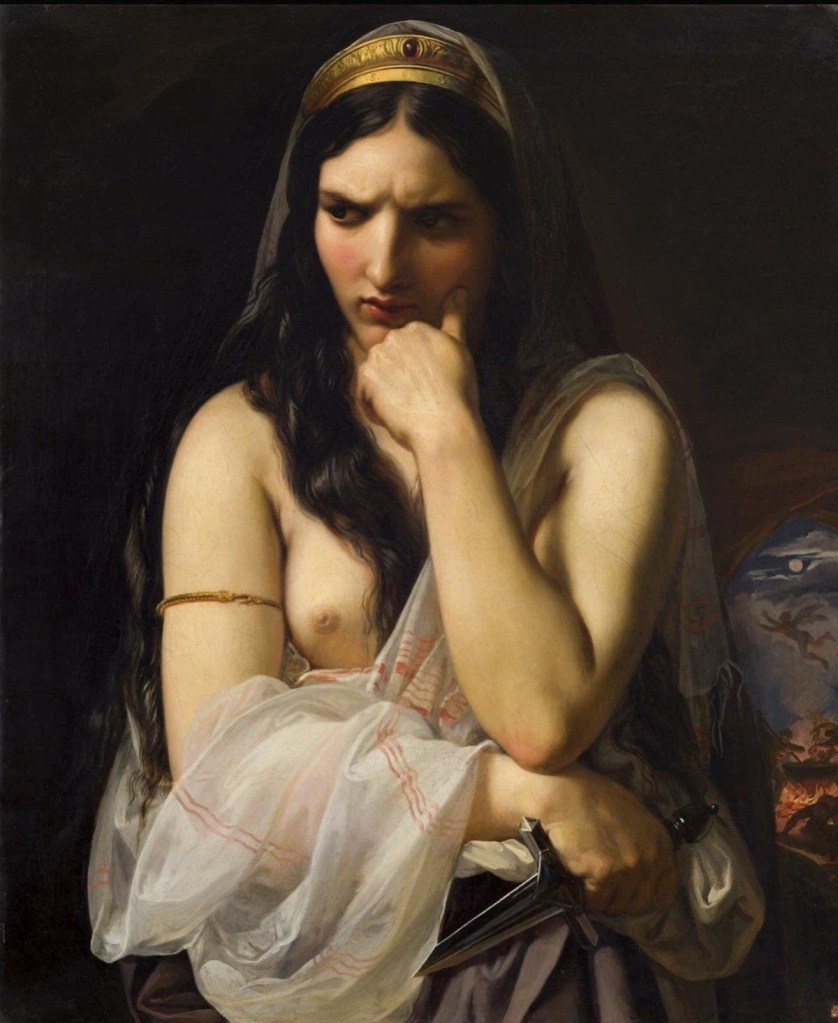
    There is something about female rage… Something beautiful. Something terrifying. And throughout art history, it has been documented, commodified, feared, and worshipped in equal measure.

    But then, sometimes, female rage doesn’t come with soft-focus lighting and a poetic backstory. Sometimes, it claws its way out in blood-red brushstrokes, in disjointed limbs and grotesque expressions. An art that makes the viewer wonder… Should I take a dagger to the thigh? 

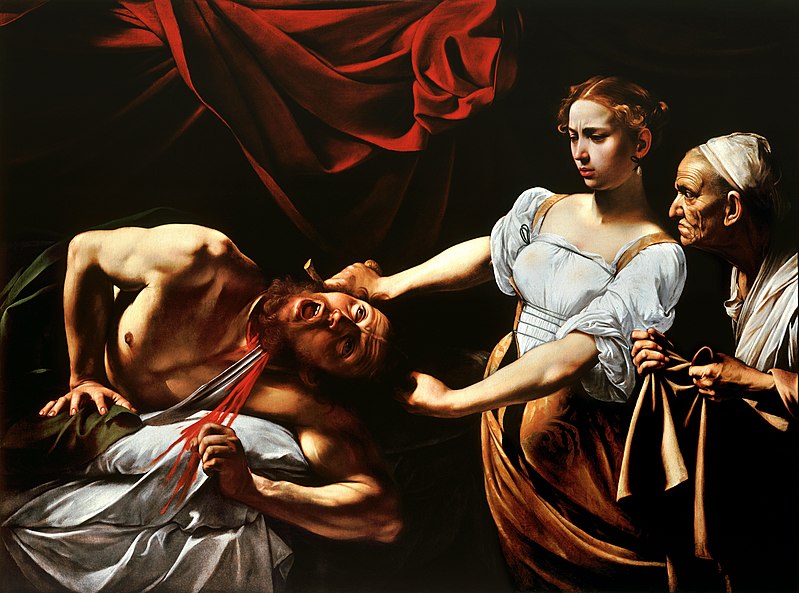
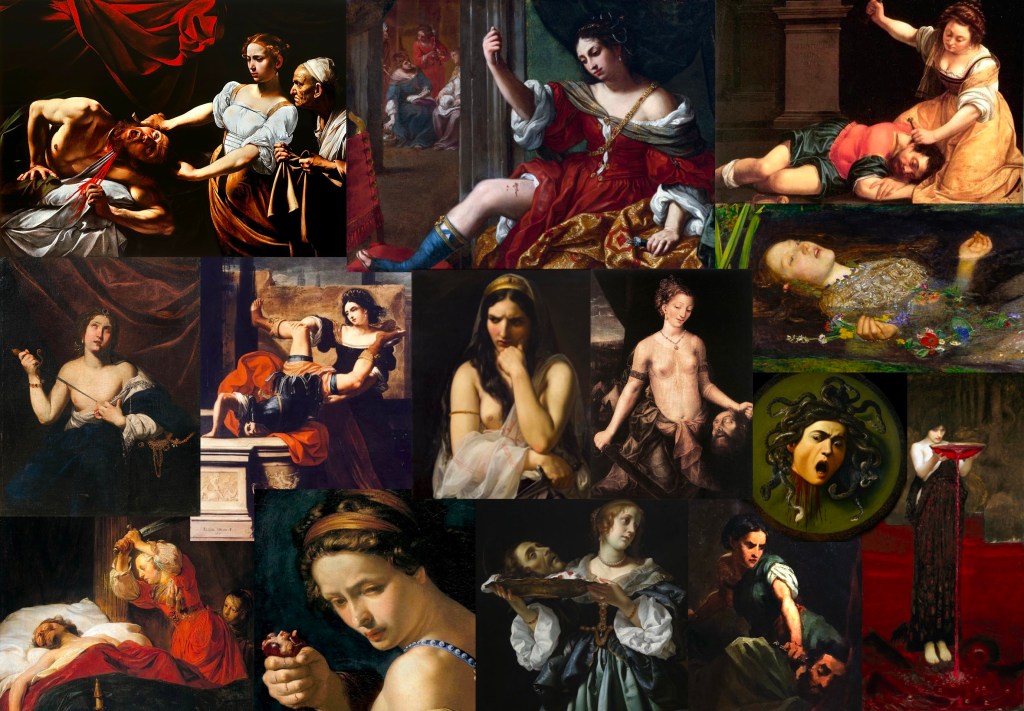
    Women’s anger, when it makes its way into art, is often dressed up in tragedy—Mad Ophelia sinking into the river, Medusa a deterrent example, Judith slaying Holofernes but still looking poised and elegant. Although there are few examples of women in this state depicted in Pre-Raphaelite oil paint, those that do exist hold a special place in my mind’s gallery.

    Take Artemisia Gentileschi, the original feminist painter, who pawed through the pages of the Bible story of Judith and Holofernes and said, “Let’s make this realistic.” The result? A painting where Judith isn’t just delicately smiting her enemy—she’s hacking at his throat with pure, unfiltered rage. Blood spurts. Tendons snap. Holofernes is not dying a cinematic death; he is dying ugly, and Artemisia made sure we knew it. This was personal.

    Compare this to Caravaggio’s Judith Beheading Holofernes, where Judith’s expression is one of disgust and hesitance. She looks almost reluctant, as if she’s completing a distasteful chore. She wears an elegant white blouse, crisp and untouched by the carnage, making her seem distant from the violence she is committing. Meanwhile, Gentileschi’s Judith is fierce and determined, her sleeves rolled up, fully engaged in the act of revenge. She is not repulsed—she is resolute. This is the difference between painting a woman’s rage from the outside and painting it from within.

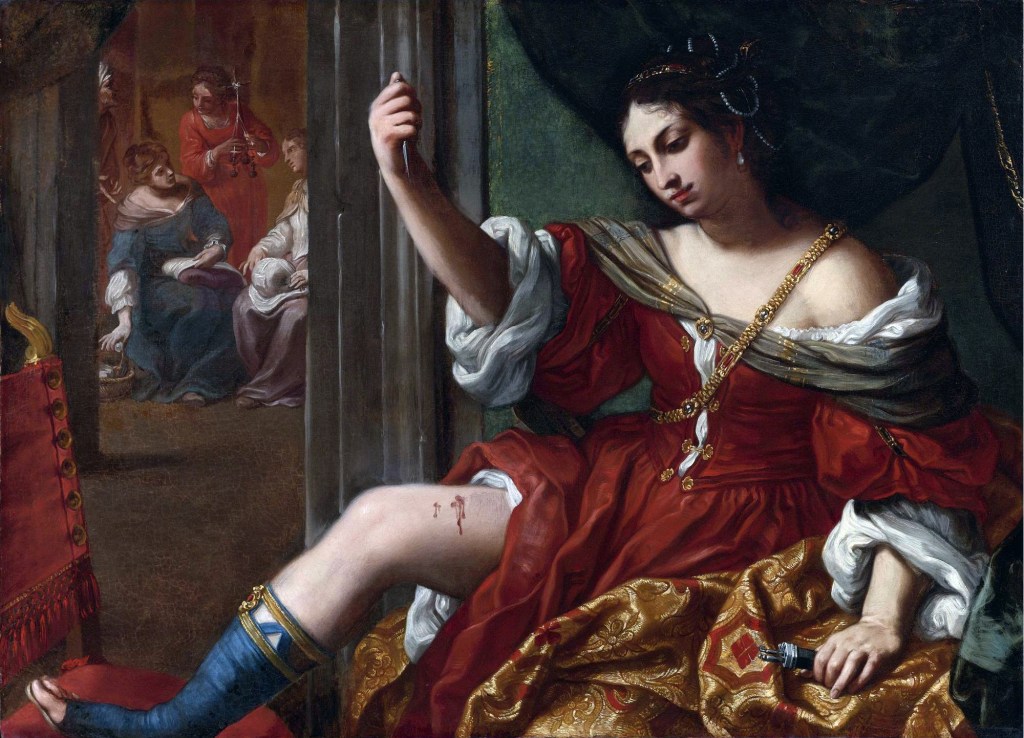
    The theme of female suffering and defiance is also captured in Portia Wounding Her Thigh, where Portia, the wife of Brutus, self-inflicts a wound to prove her strength and ability to bear pain. A dramatic and guttural moment, this act is both an assertion of willpower and an act of desperation.

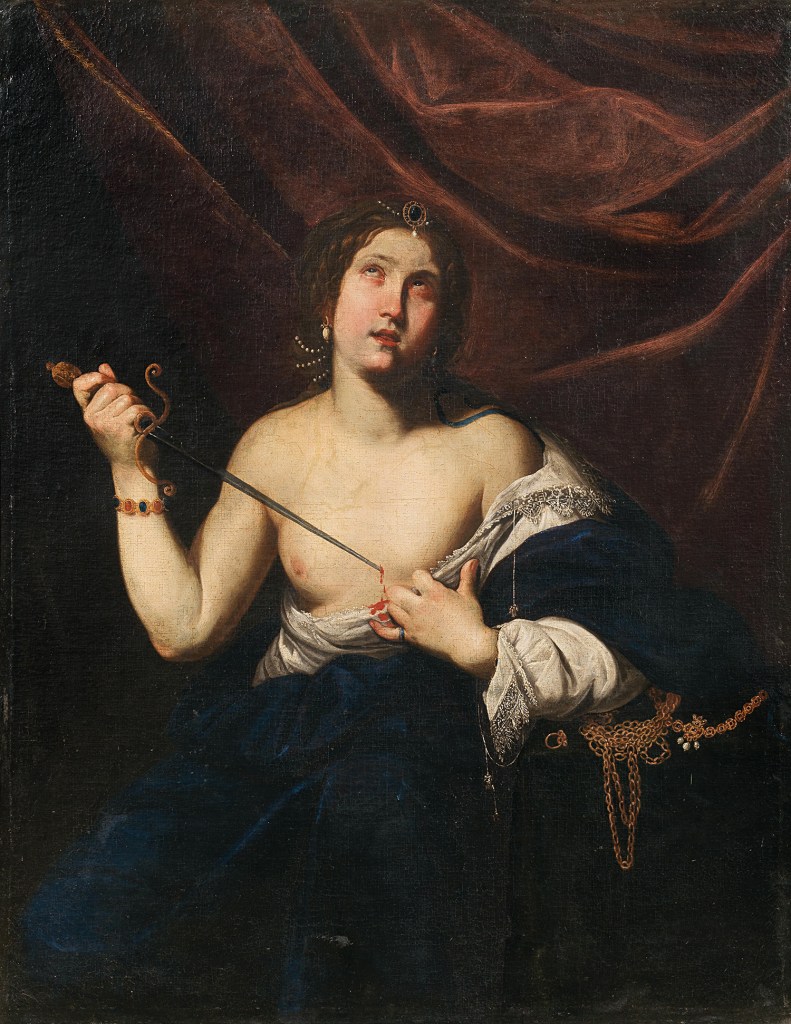
    We also see this theme in Artemisia Gentileschi’s Lucretia, where Lucretia, moments before her tragic suicide, is painted with raw emotion. Unlike other depictions that focus on her beauty or the elegance of her suffering, Gentileschi gives her a sense of agency—her expression is one of painful resolve rather than passive despair.

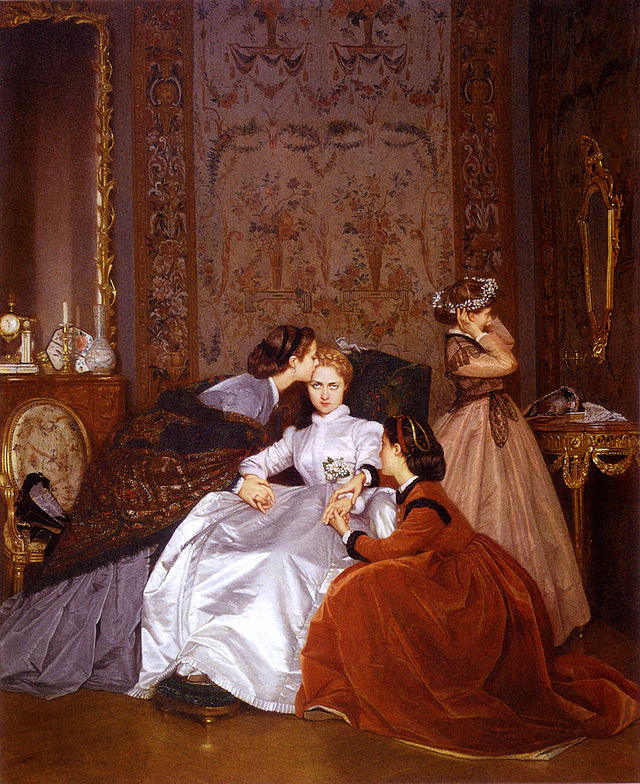
    Even in more restrained works like Auguste Toulmouche’s The Reluctant Bride, the simmering frustration is present. The bride, adorned in silks, sits frozen in place, her body language betraying a deep reluctance. It’s a quiet, suppressed rage—the kind that has long been expected of women. The kind that doesn’t get to scream, but still refuses to disappear. It is all in the eyes. 

    The thing about female rage is that it has always been there, but the world has spent centuries trying to dull its edges. Art is where those edges get sharpened again. And frankly, there is nothing more powerful—or more satisfying—than that.

    Chorus Leader: You would become the wretchedest of women.

    Medea: Then let it be.

  • Romanticise Your Life: Find Beauty in Everyday Moments

    Romanticise Your Life: Find Beauty in Everyday Moments

    My Motto for Life: “Romanticise the World”

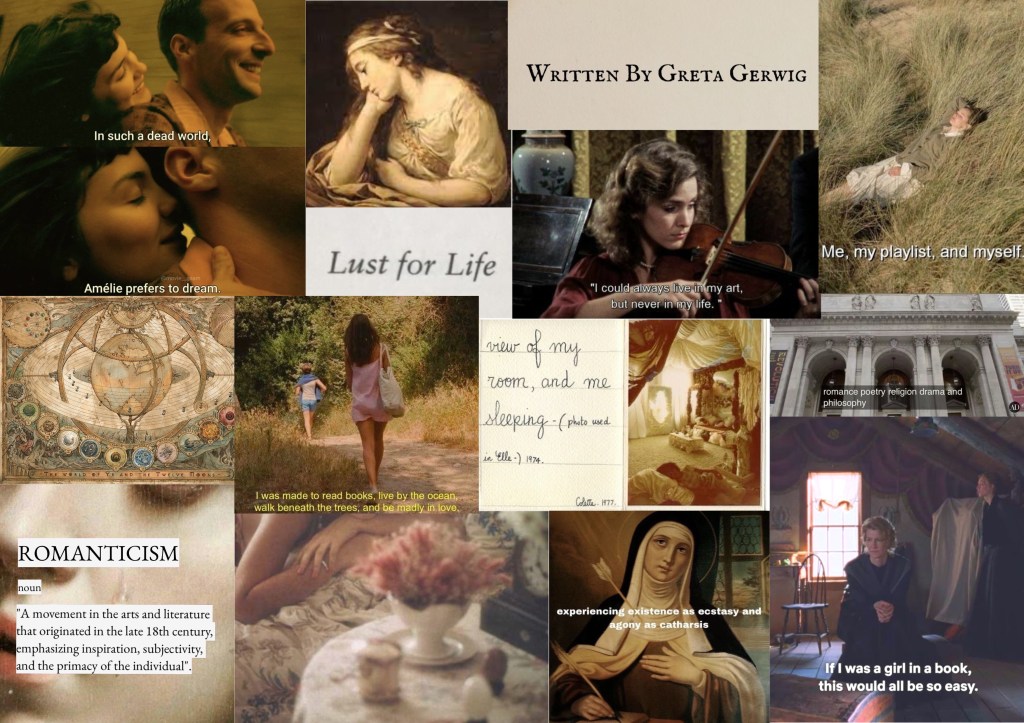
    If there’s one thing I’ve learned in my lust for life is that it’s all about making it feel more like an indie film and a little less like a laundry list of tasks. Life is infinitely better when you romanticise the world. To me, it’s not about ignoring reality but dressing it up a little—finding beauty in the mundane. I’ve always been drawn to the experience of everyday moments—those fleeting, seemingly insignificant instances that hold a quiet magic. A cup of tea steaming on a windowsill, the sunlight on cobblestones, the sound of your favourite song or a sweet scent that somehow makes you think of an old love. Call me sentimental, but I’d rather live as if I’m starring in my own heartfelt montage.

    Sometimes, even sadness has a strange kind of beauty. Melancholy is poetic—it’s the deep breath before you write a tear-stained journal entry or the rain against your window as you watch the world blur. Romanticising these moments doesn’t mean glorifying pain; it’s about finding the thread of beauty in them. It’s turning the gray clouds of your mood into a mood board for something meaningful. Think about the songs you listen to when you’re sad—aren’t they somehow the most beautiful? There’s a reason heartbreak inspires art. Melancholy teaches us to sit with our emotions, to feel deeply, and to reflect. There’s a quiet intimacy in sadness, a rawness that makes us human. It’s in these moments that we often understand ourselves better, that we tap into creativity, and that we can connect with others on a deeply empathetic level. If happiness is the sunlight, then melancholy is the moonlight—subtle, softer, but no less enchanting.

    Whether it’s a perfectly curated Pinterest board or the way you drape a scarf over your shoulder just so, aesthetics matter. They’re not frivolous; they’re how we make the ordinary extraordinary. You’d be amazed at how putting fresh flowers on your desk or lighting a candle can transform the day. Dress up—even if it’s just for yourself. Buy the fancy notebook. Life’s too short to wait for special occasions to make things lovely. The secret? When everything feels like an occasion, the world begins to sparkle.

    What’s a leading lady without her ensemble cast? Friends and love bring color to the grayscale moments of life, and they deserve their own cinematic close-ups. Romanticising your relationships means treasuring the traditions you share—like going to your favourite places together every week or sending secrets at midnight. Love, whether it’s a partner or platonic, is a story worth cherishing. It’s finding poetry in the way someone knows your coffee order or sends you photos of something that made them think of you. 

    Advice: How to Find Beauty in the Mundane

    1. Slow Down: Sometimes beauty hides in plain sight, but you have to stop rushing to notice it. Look up at the trees, watch the clouds, or just admire the way your tea steams in the morning light.
    2. Set the Scene:Create a little theater of beauty in your everyday life. Decorate your bedroom with soft lighting and cozy textures, and surround yourself with curated trinkets that tell your story—a seashell from a past trip, a framed photo, or a little statue that makes you smile. Turn even the most mundane routines into rituals that feel intentional and special.
    3. Look for Small Joys:Notice the quiet wonders around you—a stranger’s unexpected kindness, the satisfying crunch of leaves beneath your feet, chirping of birds in the morning, savoring how soft fabric feels warm and comforting against your skin. Seek out moments that make you pause, breathe, and feel grateful.
    4. Document It: Take photos, keep a journal, or make playlists that capture how a moment feels. Memory fades, but art keeps the beauty alive.

    Life won’t always hand you grand, sweeping gestures, but it will give you endless small moments of wonder if you know how to look for them. Immerse yourself in a story that changes the way you see the world. Devour a book that opens your eyes to new truths and shakes the foundations of everything you thought you knew. Watch a film that lights a fire in your soul, reminding you of the beauty, power, and fragility of the human experience. Here’s to romanticising the world—may your days feel like poetry and your nights like dreams. Now go light that candle.