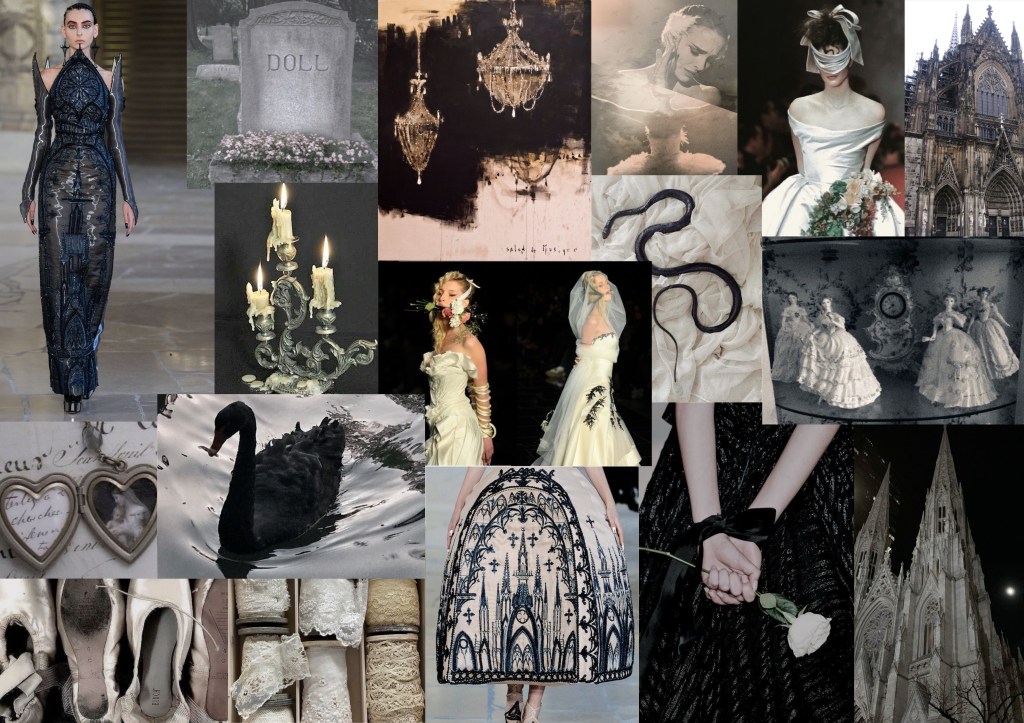
There’s something deliciously compelling about the combination of lace and limestone, the curve of a coquette’s skirt twirling past the soaring arches of a gothic cathedral. Architecture and fashion, though seemingly worlds apart, share a magnetic pull: both seek to define space, to tell a story, and to captivate anyone who dares to look. This dance between the delicate and the dramatic has never been more relevant as coquette fashion finds itself in an unexpected romance with the shadowy architecture. What’s funny is that, on paper, these two styles couldn’t be more different—the whimsy and blush of coquette versus the ominous majesty of the gothic—but opposites, as they say, attract.
Picture it: the image of a high-collared blouse with puff sleeves against the backdrop of a towering cathedral. The ruffles catch a gentle breeze, the soft fabrics swirling around pillars carved with ancient figures. The coquette look might seem delicate, but much like the gothic facade behind it, it holds an edge beneath its softness. This isn’t a damsel but rather a modern spirit with a vintage soul, strolling through the cathedral’s nave like it’s just another Tuesday. Coquette fashion, with its heart-shaped buttons, dainty bows, and feminine details, whispers sweetness, but when paired with something as grand as my favored architecture, the style transforms, gaining a sense of gravity.
The contrast is part of the magic. Gothic architecture was, after all, designed to make you feel small, to inspire reverence and a certain awe. But coquette fashion—a delightful mix of flirtation and femininity—softens this grandiosity, coaxing out a sense of intimacy. The cathedral becomes less foreboding and more like an enchanting scene from a period drama, with our coquette stepping in as the heroine. It’s as if she’s waltzing through history, adding her own gentle defiance to a space traditionally associated with solemnity. Who said you couldn’t bring a little blush-pink into the hallowed halls?
The coquette-gothic romance isn’t just about aesthetics; it’s a story of character. Gothic cathedrals are celebrated for their grotesques and gargoyles, little carved creatures that peer out from hidden corners. In fashion terms, these are the delightful quirks of the ensemble: the tiny unexpected elements—a bow, a velvet ribbon, a cheeky brooch. In both realms, there’s an appeal to detail, to the intricacies that make each element memorable. And while a cathedral’s gargoyle might look slightly intimidating, the coquette’s dainty pearl necklace or delicate lace.
Historically, coquette fashion and gothic architecture both emerged from periods of transformation and upheaval. Gothic architecture blossomed in the Middle Ages, when Europe was reimagining itself through culture, spirituality, and art. Similarly, the coquette style, with roots in 18th-century courtly flirtations and revived in various forms since, has always symbolized a sense of playful rebellion against societal expectations. While the cathedral stands as a reminder of enduring tradition, the coquette brings in the winds of change, a little charm, and perhaps a hint of defiance to shake things up.
For those willing to blend these styles in everyday fashion, a touch of gothic coquette can be surprisingly wearable. Imagine a fitted blazer with lace trim, paired with a ruffled blouse or velvet skirt—a combination that nods to gothic grandeur but is still light enough for the modern coquette. Accessories can do much of the work here: think ornate earrings reminiscent of stained-glass windows or delicate gloves that bring to mind the finery of a past era.
In the end, the romance between the coquette and the cathedral reminds us that style is a playful exploration of contrast and character. By blending these two seemingly opposed aesthetics, we’re invited into a world that’s both soft and strong, whimsical and powerful. It’s the kind of love story that doesn’t take itself too seriously, winking at tradition while giving it a gentle nudge into the present. After all, who says you can’t wear your heart on your sleeve—or, in this case, a ruffled blouse and a gothic brooch—while standing beneath the arches of history?
 Atelier Lauren Jane