Category: lifestyle

  • The Lonely Hearts of Literature: Why So Many of the Greatest Female Romance Writers Never Married.

    The Lonely Hearts of Literature: Why So Many of the Greatest Female Romance Writers Never Married.

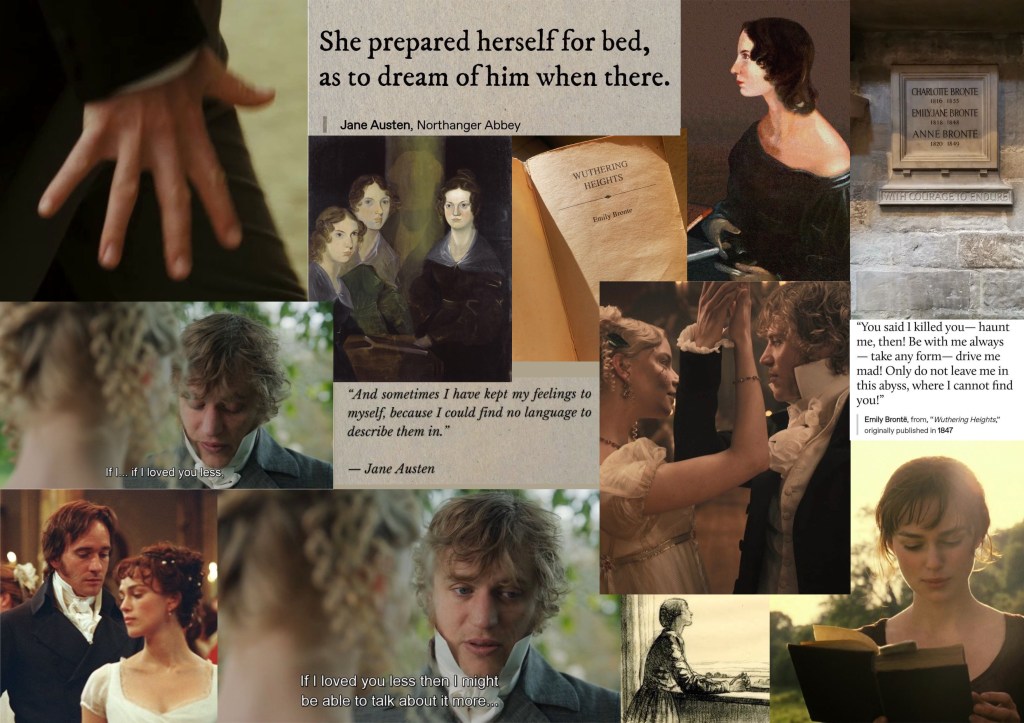
    There is a peculiar irony that lingers in the pages of history: some of the greatest love stories ever written were crafted by women who never lived them. Jane Austen, who gave us the sharp-witted and swoon-worthy Mr. Darcy, never married. The Brontë sisters, whose novels are infused with lust and longing, lived quiet, uneventful lives, largely untouched by romance. Emily Dickinson, whose poetry reads like the breath of a love-stricken heart, spent much of her life in solitude, sending letters to an unnamed beloved who may never have truly existed.

    And yet, these women captured love better than those who lived and lost it. Their words are corroded into our collective consciousness, their stories devoured by generations who turn to fiction in search of the love they cannot find in reality. Why is it that the women who understood love so deeply, who could write it into existence so convincingly, never found it for themselves?

    To be a woman writer in the 18th and 19th centuries was to make a choice. The quiet comfort of marriage or the wild freedom of the mind. Few could have both. Marriage, for most women of that time, was a legal and financial transaction, one that rarely allowed room for creative ambition. 

    Jane Austen, whose novels overflow with canniness and romance, knew this reality all too well. She had her chances, there was Tom Lefroy, a youthful flirtation that was cut short by his family, and Harris Bigg-Wither, whom she briefly accepted before recoiling at the thought of a life bound in uninspired matrimony. In the end, Jane chose her pen over a ring, writing to her niece that “anything is to be preferred or endured rather than marrying without affection.”

    The Brontës, too, lived in a world where marriage was often a compromise rather than a grand love affair. They were raised in near isolation on the Yorkshire moors, their imaginations fed by the rolling hills and the books they devoured. Emily Brontë, the most reclusive of the three, never married, never seemed to have a lover, and yet she wrote Wuthering Heights—a novel so feverish, so consumed by passion, that it seems impossible that it came from the mind of a woman who had never known love herself. Perhaps, for Emily, love existed more beautifully in her imagination than in reality. 

    It is natural to assume that a writer must experience these moments to write it well, but history proves otherwise. In fact, distance may have given these women an even greater ability to understand love. Free from the distractions of real-world relationships which are often messy, mundane, and often disappointing. They were able to construct love in its purest, most idealized form. 

    This may be why their love stories endure. Their understanding of romance was not clouded by the small, inevitable disenchantments of everyday life. They wrote of soulmates, of passion that defied reason, of love that burned so intensely it could only end in tragedy or eternity.

    Emily Dickinson, for example, wrote poetry that oozed with longing. Her words were intimate, secretive, as though written in the dead of night for a lover she could never touch. “Wild nights—wild nights! / Were I with thee,” she wrote, though history gives us little proof that she was ever truly with anyone at all. Perhaps she didn’t need to be. The craving itself was enough.

    Another aspect, a tale the modern woman now knows too well, is that maybe the reason why so many of these women never found love, is that they were simply too extraordinary for the time in which they lived. The men around them could not match their minds, could not keep up with their wit, could not understand the depths of their ambition. 

    Imagine being a woman in Austen’s time, capable of crafting dialogue so sharp it could draw blood, so perceptive it could dismantle an entire social structure in a single sentence. What man could keep up? Imagine being Emily Brontë, so enraptured by the profundity of her imagination that no earthly love could compare. Who could be her Heathcliff?

    It is tempting to mourn for these women, to wish they had known the great, sweeping loves they so beautifully captured on the page. But perhaps, in some way, they did. Perhaps their love was not meant for one man, for one fleeting romance, but for something far greater. Their love was for the world, for the women who would read their words centuries later and find themselves within them.

    Love, after all, is not just something to be lived—it is something to be imagined, to be felt, to be created. And in that, these women were never without it.

    Would love have made their work greater, or would it have dulled the longing that made it so extraordinary?  
  • Romanticise Your Life: Find Beauty in Everyday Moments

    Romanticise Your Life: Find Beauty in Everyday Moments

    My Motto for Life: “Romanticise the World”

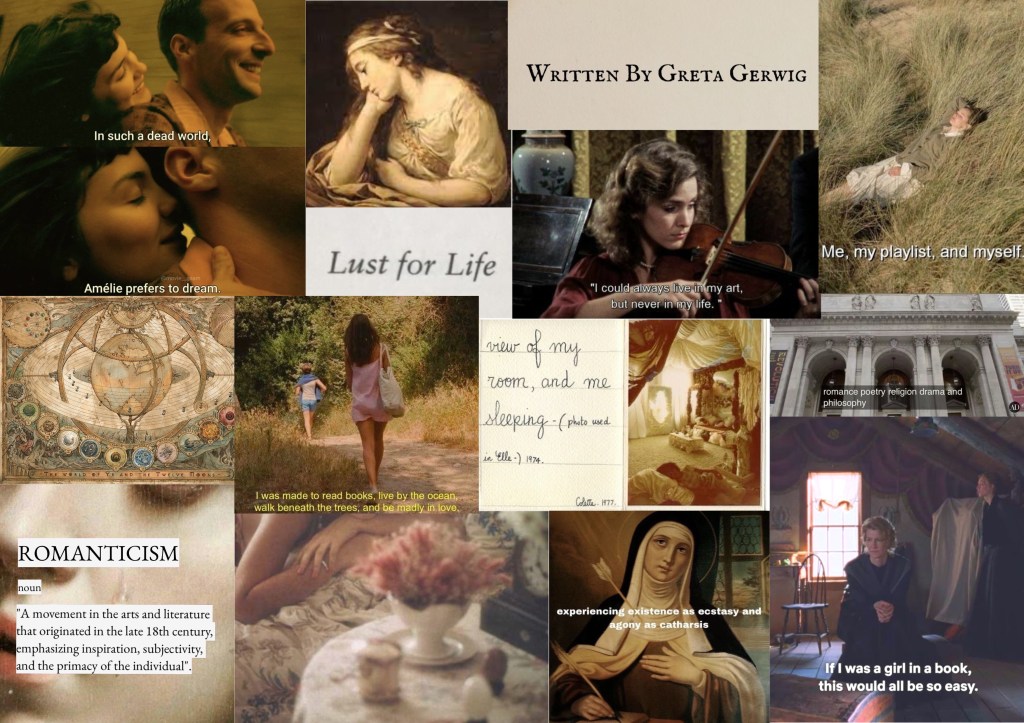
    If there’s one thing I’ve learned in my lust for life is that it’s all about making it feel more like an indie film and a little less like a laundry list of tasks. Life is infinitely better when you romanticise the world. To me, it’s not about ignoring reality but dressing it up a little—finding beauty in the mundane. I’ve always been drawn to the experience of everyday moments—those fleeting, seemingly insignificant instances that hold a quiet magic. A cup of tea steaming on a windowsill, the sunlight on cobblestones, the sound of your favourite song or a sweet scent that somehow makes you think of an old love. Call me sentimental, but I’d rather live as if I’m starring in my own heartfelt montage.

    Sometimes, even sadness has a strange kind of beauty. Melancholy is poetic—it’s the deep breath before you write a tear-stained journal entry or the rain against your window as you watch the world blur. Romanticising these moments doesn’t mean glorifying pain; it’s about finding the thread of beauty in them. It’s turning the gray clouds of your mood into a mood board for something meaningful. Think about the songs you listen to when you’re sad—aren’t they somehow the most beautiful? There’s a reason heartbreak inspires art. Melancholy teaches us to sit with our emotions, to feel deeply, and to reflect. There’s a quiet intimacy in sadness, a rawness that makes us human. It’s in these moments that we often understand ourselves better, that we tap into creativity, and that we can connect with others on a deeply empathetic level. If happiness is the sunlight, then melancholy is the moonlight—subtle, softer, but no less enchanting.

    Whether it’s a perfectly curated Pinterest board or the way you drape a scarf over your shoulder just so, aesthetics matter. They’re not frivolous; they’re how we make the ordinary extraordinary. You’d be amazed at how putting fresh flowers on your desk or lighting a candle can transform the day. Dress up—even if it’s just for yourself. Buy the fancy notebook. Life’s too short to wait for special occasions to make things lovely. The secret? When everything feels like an occasion, the world begins to sparkle.

    What’s a leading lady without her ensemble cast? Friends and love bring color to the grayscale moments of life, and they deserve their own cinematic close-ups. Romanticising your relationships means treasuring the traditions you share—like going to your favourite places together every week or sending secrets at midnight. Love, whether it’s a partner or platonic, is a story worth cherishing. It’s finding poetry in the way someone knows your coffee order or sends you photos of something that made them think of you. 

    Advice: How to Find Beauty in the Mundane

    1. Slow Down: Sometimes beauty hides in plain sight, but you have to stop rushing to notice it. Look up at the trees, watch the clouds, or just admire the way your tea steams in the morning light.
    2. Set the Scene:Create a little theater of beauty in your everyday life. Decorate your bedroom with soft lighting and cozy textures, and surround yourself with curated trinkets that tell your story—a seashell from a past trip, a framed photo, or a little statue that makes you smile. Turn even the most mundane routines into rituals that feel intentional and special.
    3. Look for Small Joys:Notice the quiet wonders around you—a stranger’s unexpected kindness, the satisfying crunch of leaves beneath your feet, chirping of birds in the morning, savoring how soft fabric feels warm and comforting against your skin. Seek out moments that make you pause, breathe, and feel grateful.
    4. Document It: Take photos, keep a journal, or make playlists that capture how a moment feels. Memory fades, but art keeps the beauty alive.

    Life won’t always hand you grand, sweeping gestures, but it will give you endless small moments of wonder if you know how to look for them. Immerse yourself in a story that changes the way you see the world. Devour a book that opens your eyes to new truths and shakes the foundations of everything you thought you knew. Watch a film that lights a fire in your soul, reminding you of the beauty, power, and fragility of the human experience. Here’s to romanticising the world—may your days feel like poetry and your nights like dreams. Now go light that candle.

  • Embracing Literary Luxe: The Convergence of Style and Knowledge

    Embracing Literary Luxe: The Convergence of Style and Knowledge

    Summoning a sense of romantic nostalgia, Libraries will always encapsulate a tranquil reverence for knowledge and storytelling that withstands lifetimes. I picture myself as a child wide-eyed and soaking up the rows of worn hardcover books, the smell of aged pages, the hushed whispers and the soft echo of footsteps emanating from those browsing. In contrast, the particular energy flowing from the books, which countless souls have found solace and escape from the adventures between the bindings. 

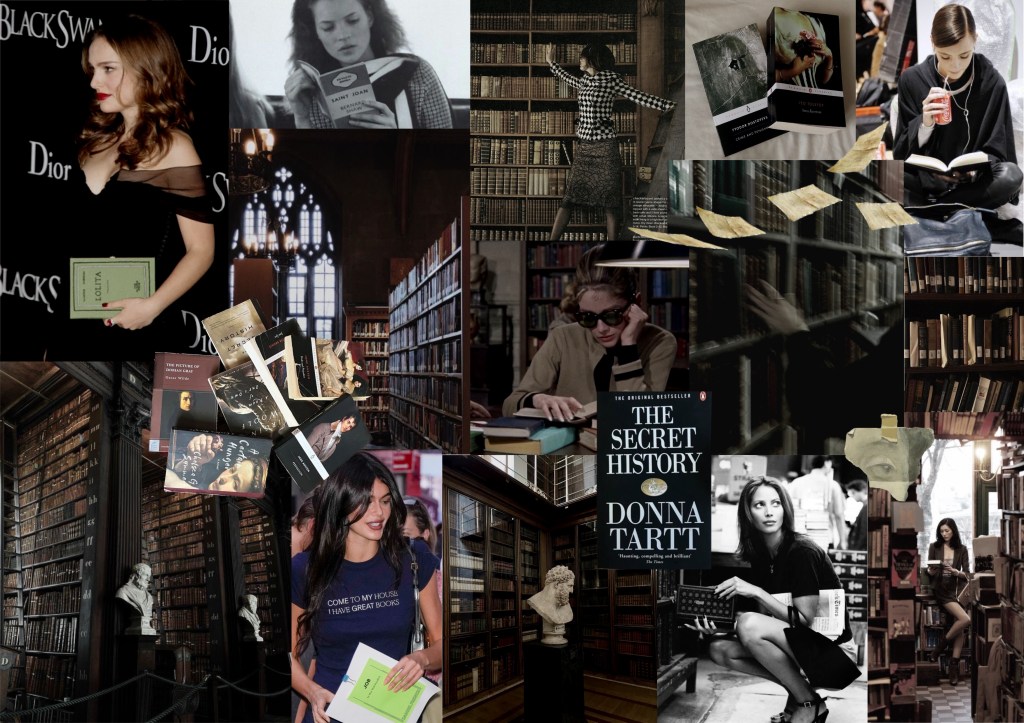
    For what was believed to be a timeless space, the library lost its footing to the rise of technology; however, due to a blend  of sentimentality and vintage charm, stepping into a library has never been more fashionable. For many, dressing up and going to the library is a way to channel the intellectual elegance of another era, like stepping into a scene from The Secret History.

    Think tailored tweed jackets with oversized wool sweaters underneath, a mini skirt and tights, a tortoiseshell headband and a leather-bound journal set against a backdrop of bookshelves and wooden tables, a celebration of classic academic style illuminated by natural light streaming through old windows. I consider this to be the “literary lux” aesthetic unique in its commitment to creating a visual narrative where intellect and opulence coexist. 

    But would it be unproductive to cement this practice into a two-word aesthetic? A hashtag online? This trend speaks to a louder cultural shift towards slowing down, disconnecting, putting down the blue light, and picking up the pages. After all, the idea of escaping modernity is what conjures up a trending aesthetic anyway. But this is special; it comes from the deliberate choice to opt for a place of knowledge over distraction to pick up a book instead of scrolling on social media. It’s about reading, learning, and the pursuit of knowledge being aspirational again. 

    That is not to say we cannot romanticise; there is already a plethora of perfectly curated snapshots of people reading in beautifully designed spaces—plush armchairs, stacks of novels, showing off a book collection; it’s about capturing the atmosphere of being immersed in literature and learning, making the library a trendy place to be. The content creation does not stop there. Here, high fashion meets literary culture with a curated aesthetic that’s as much about personal expression as it is about the love of books.

    Books are the ultimate accessory that adds a layer of personalisation to the Literary Luxe look. Just as a particular designer bag says something about the wearer’s taste, so does a carefully chosen novel. A tattered copy of Wuthering Heights suggests a brooding romanticism, while a sleek, modern edition of The Metamorphosis hints at a more intellectual, dystopian vibe. In this way, books allow individuals to communicate their personality and style preferences without saying a word. In the realm of Literary Luxe, the book you carry is as important as the bag on your arm or the shoes on your feet. 


    One of the most notable examples of this trend is Olympia Le-Tan’s iconic book clutch bags, which have become a favourite of style icons like Natalie Portman and Emma Watson. These embroidered clutches are designed to resemble the covers of classic novels, such as when Natalie Portman carried the Lolita clutch on the red carpet at the 2010 premiere of Black Swan. This aesthetic also manifests through influencers on Instagram who often style outfits to match the books they read. These posts feature beautifully composed shots of clothes paired with hardcover books, frequently set in picturesque locations such as vintage libraries or luxurious cafes. The books become an extension of their style, creating an intersection between fashion and reading culture. 

  • Unveiling Creative Influences: From Gothic Fashion to Ethereal Films and Haunting Paintings

    Unveiling Creative Influences: From Gothic Fashion to Ethereal Films and Haunting Paintings

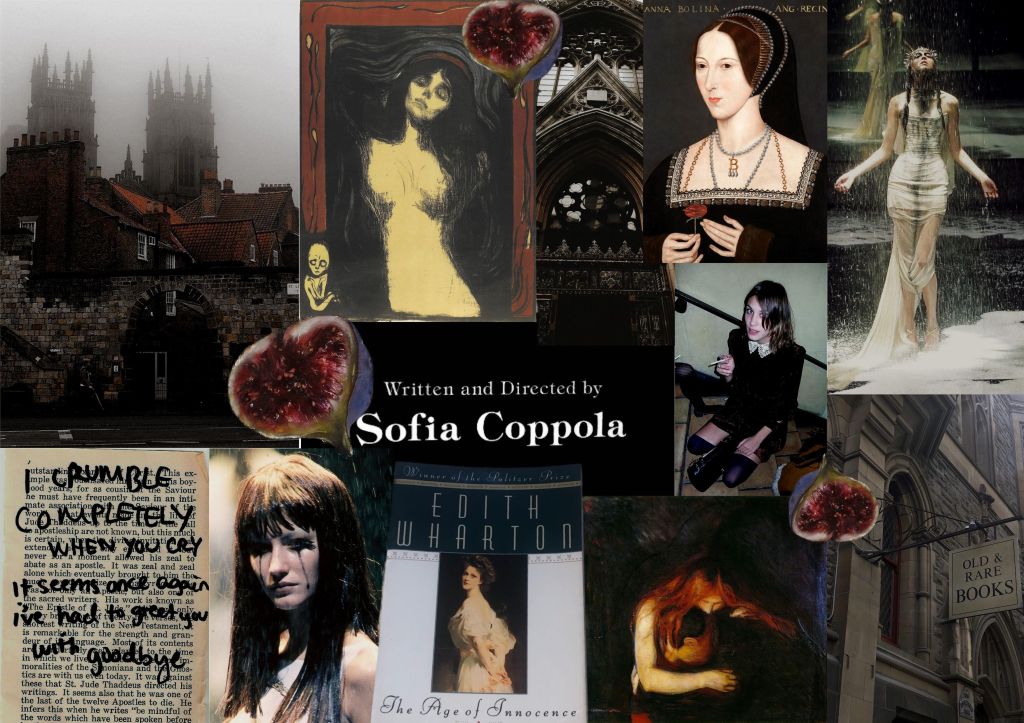
    I saw my life branching out before me like the green fig tree in the story. From the tip of every branch, like a fat purple fig, a wonderful future beckoned and winked. One fig was a husband and a happy home and children, and another fig was a writer, and another fig was a filmmaker, and another fig was a fashion designer, and another fig was England and America and France, and another fig was Austin and Plath and Wharton and a pack of other lovers with queer names and offbeat professions, and another fig was an art director, and beyond and above these figs were many more figs I couldn’t quite make out. I saw myself sitting in the crotch of this fig tree, starving to death, just because I couldn’t make up my mind which of the figs I would choose. I wanted each and every one of them, but choosing one meant losing all the rest, and, as I sat there, unable to decide, the figs began to wrinkle and go black, and, one by one, they plopped to the ground at my feet. 

    The fig tree analogy in The Bell Jar by Sylvia Plath immobilises me at the mere thought of the word “fig.” My tree has been a burden to me since I gained consciousness of the fact I have to be someone. Considering myself an artist in the most pretentious sense of the word, most of my influence stems from England. The music, culture, and gothic architecture constantly having grey clouds overhead, but most notably, the fashion. From travelling exceedingly as a child, my favourite game to play with myself was comparing what the cool girls would wear in each country, constantly analysing styles between the US and UK, and trying to find myself right in the middle, taking pieces from each. My style icon is Alexa Chung, the quintessential British “It Girl.” Her signature style seamlessly fuses British heritage pieces and vintage finds with a modern edge, effortlessly pairing feminine dresses with tomboyish staples like loafers, oversized sweaters, or blazers. She is the type of girl to wear a peter pan collar and Miu Miu ballet flats to the pub. This has made her a muse for designers and a beloved figure in street-style photography. Additionally my fashion designer of choice has always been Alexander McQueen. He frequently pushed the boundaries of traditional women’s fashion, incorporating gothic, romantic, and surreal elements. His collections often feature intricate tailoring, elaborate fabrics, and bold silhouettes that challenged conventional ideas of femininity. McQueen’s designs celebrated the strength and complexity of women, often reflecting themes of empowerment and vulnerability.

    I don’t watch many movies or TV shows. I often say I would rather hallucinate my stories between ink on pages and songs with lyrics that flow in and out of my consciousness. However, some films are able to break through my wall. Storytellers who I allow to make me sit and watch the visual contents of their minds. Sofia Coppola comes to the forefront of thought. Her films focus on themes of isolation, identity, and privilege, frequently depicting young women grappling with existential issues. Coppola uses sparse dialogue, lingering shots, and atmospheric soundtracks to create a sense of emotional distance and melancholy. The mood of her work is often ethereal and intimate, evoking a subtle, quiet beauty. That which encapsulates my being and what I hope to convey to the world.  

    I find myself daydreaming intensely, almost to a fault; music, the soundtrack to my creativity, usually depends on Arctic Monkeys’ lyrics, which often explore themes of youth, nightlife, relationships, and introspection. Alex Turner crafts vivid, frequently witty, and poetic depictions of love, desire, and the complexities of modern life. Their songs are filled with clever wordplay, sharp observations about social dynamics, and a sense of urban realism. Many tracks have a nostalgic or melancholic undertone, blending emotional depth with energetic, guitar-driven sounds. There’s a recurring theme of romance, self-awareness, and reflection on fleeting moments, all wrapped in evocative imagery. 

    I don’t necessarily have a favourite author. I know I am akin to specific genres and believe they have to start giving titles to books in which a young, beautiful girl goes insane due to reacting to her self-inflicted reality and starts taking sleeping pills. Those always resonate: “I understand her.” I think of these characters and keep them close to my heart. May Welland is the central character in The Age of Innocence by Edith Wharton. Who embodies the ideal image of innocence and purity. Although outwardly conforming to societal expectations, she shows subtle strength and determination; despite her seeming naivety, she proves to be more perceptive and manipulative than she first appears. 

    I have always been envious of those who know their favourite piece of art. Mine changes often, though I have always gravitated towards Edvard Munch’s painting “The Vampire,” which depicts a woman with a menacing, almost demonic appearance kissing a man whose head is pressed against her shoulder. The painting is known for its intense emotional impact and unsettling atmosphere. The woman’s gaze is hypnotic and predatory, reflecting themes of obsession and desire. The dark, moody colour palette and dramatic composition contribute to the artwork’s overall sense of dread and unease. I appreciate Edvard’s work.  His expressionist paintings explore themes of anxiety, death, and existential dread. Edvards Munch’s art often reflects his struggles and the psychological depth of the human condition.

    I believe every woman needs an emotional support historical figure. Fortunately for me, I have two. Anne Boleyn symbolises the complex interplay between personal ambition, political power, and religious change in early 16th-century England. Additionally, her life and tragic end have made her a lasting figure in literature and popular culture, embodying themes of love, betrayal, and the struggle for influence. Though I adore how Anne fought for political power, I have a soft spot for Queen Victoria; I always ensure jet jewelry is visible on my body for her. On her wedding day, she wore a white satin gown adorned with Honiton lace, a break from the tradition of colorful bridal dresses. This decision helped popularize white as the standard for brides, symbolizing purity and innocence. In stark contrast, Queen Victoria entered a long mourning period after her husband’s death, Prince Albert. She famously wore black mourning attire for the rest of her life, making the “widow’s black” a symbol of grief and loss. Her mourning dress, austere and somber, became synonymous with the mourning culture of the Victorian era, shaping fashion trends for decades. Her white wedding gown and black mourning dress reflect the intensely personal emotions she associated with love and loss, turning these garments into historical symbols of her life and reign.

    Though I, unfortunately, do not have a British Monarchy to rule or an adaptation of The Virgin Suicides to write up, I find my creative inspiration in an amalgamation of visual art, music, literature, and history, which influence how I perceive and interpret the world. Whether it’s Sofia Coppola’s ethereal films, the Arctic Monkeys’ introspective lyrics, Munch’s haunting paintings, or the complex lives of women like Anne Boleyn and Queen Victoria, I connect gravely with themes of isolation, identity, ambition, and desire. These influences echo my introspections and fuel my constant search for beauty in the melancholy and complexity of life.