The air is thick with the scent of damp stone and burning tallow, the flickering light of candelabras casting long shadows across the marble halls. Somewhere beyond the towering arches, a lute strums a melancholic tune, each note carrying the melody of a forgotten age. And in the hush of nightfall, a figure emerges, draped in velvet so dark it seems to drink in the moonlight. The swish of fabric against the cold floor, the glint of metal filigree catching the firelight—this is not the past, but the present, resurrected in silk and steel.
The medieval revival sweeping through fashion is no fleeting fancy, no mere dalliance with nostalgia. It is a grand reclamation of magic and romance, a yearning for the beauty of an era when garments bore weight, both in fabric and in meaning. The modern world, weary of its own transience, turns its gaze to an age where craftsmanship reigned, where every embroidery thread spun a tale and every jewel held the weight of centuries.
Designers, like alchemists of old, have transmuted history into haute couture, conjuring forth gowns that hint at courtly love and adventure. Billowing sleeves catch the wind like the sails of a ship bound for unknown lands. “Stays” (the precursor to corsets), recall the sculpted grace of statues in dimly lit chapels. Chainmail gleams in the candlelight, evoking the silent ardency of knights sworn to their cause. Each piece is an incantation infused in wool and linen.
The artistry of the Middle Ages unfurls anew, its gilded details and celestial motifs finding their way onto rich brocades and flowing cloaks. Like the sacred relics enshrined in gothic cathedrals, these garments demand reverence. Pearls drip like dewdrops from delicate veils, while precious stones nestle in as if plucked from the crown of a long-beloved queen. Even the architecture of the time—a symphony of pointed arches and soaring spires—finds its place in the structured silhouettes and dramatic drapery of this revived aesthetic.
Medieval art, painted in gold leaf and deepest azurite, offers another wellspring of inspiration. The intricate illuminations of manuscripts, their swirling vines and delicate figures, appear once more. Triptychs depicting saints with sorrowful eyes and robes of scarlet and sapphire relay their mystery through the intricate folds of modern pattern design. The glow of stained glass windows lend their color palettes to jewel-toned velvets and rich fabrics. Each piece of this revival mirrors the past, not merely in style, but in spirit—honoring an age where every prayer to beauty was hand-spun.
And what of the stories? The great tales of honor and heartbreak, of knights who ride into the night never to return, of love letters penned on parchment and doused in ink from quill feathers? They, too, live again. The very essence of medieval literature—its devotion to enchantment, its obsession with fate—seeps into the folds of these garments, turning them into wearable poetry. To don them is to step into folklore, to hear the distant clamor of a joust, to feel the hush of a moonlit garden where lovers meet in secret.
Why now? When the fashion industry has long replaced its looms for factories? Perhaps it is because we seek the permanence that the Middle Ages promised. In an age of haste, we long for the patience of hand-stitched garments, for the weight of a gown heavy with history. Fashion, ever the mirror of desire, has answered with an invitation: step through the cordiform book, into a time when every piece was a story.
In a moment of yearning to keep the Medieval aesthetic from becoming “too online” I posted to my instagram “Medieval revival trending in 2025! This era literally courses through my veins but yea..” coupled with imagery of a chainmail pouch, a middle ages costume design sketch, and the unicorn rests in a garden tapestry. Though with all intentions of being a gatekeeper. Here is where I met Samantha Pleet.
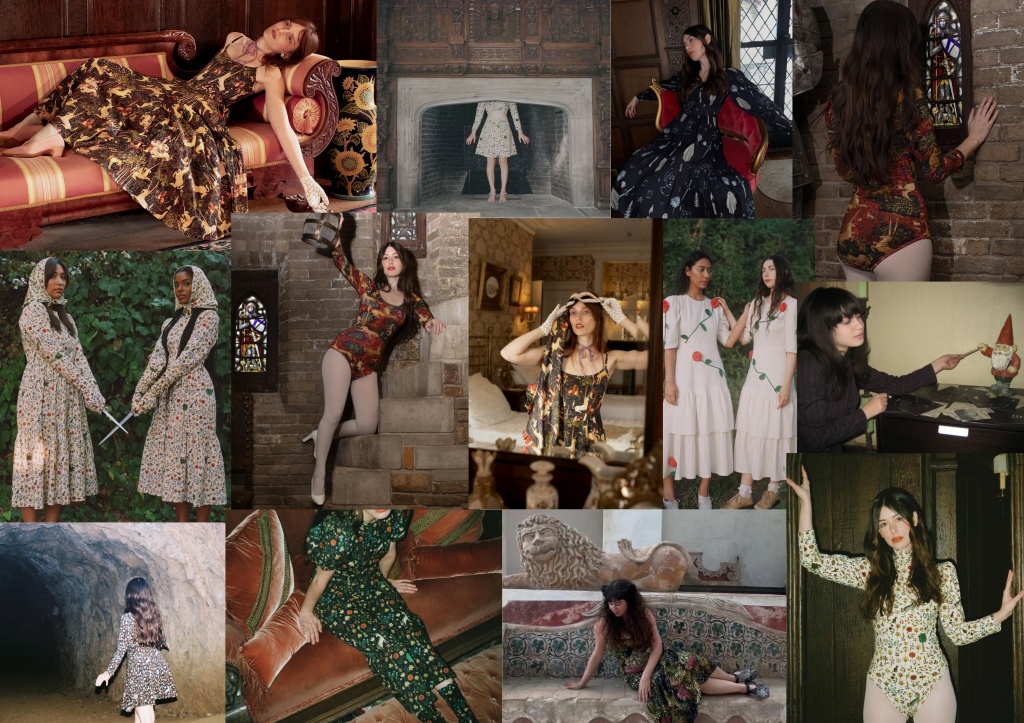
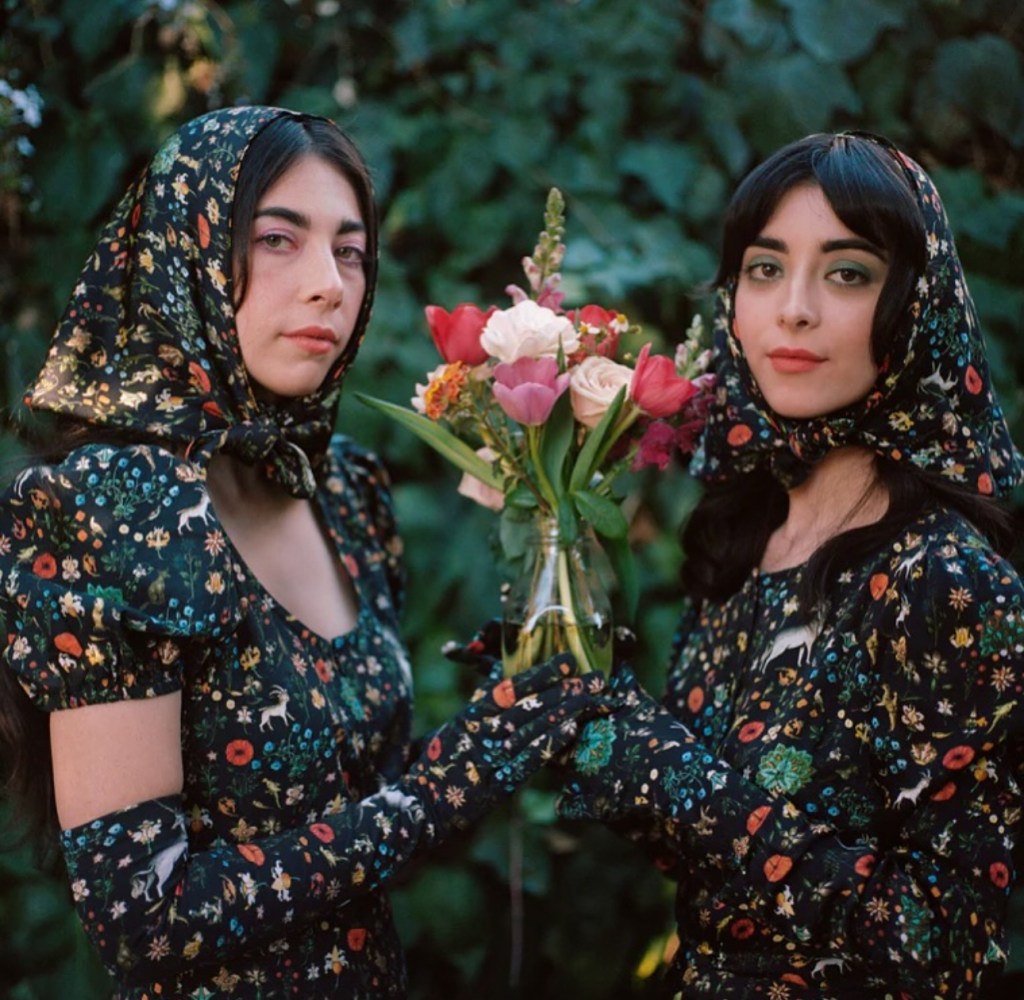
Samantha Pleet has created a world where fashion feels like a fairy tale, where traces of magic are interlaced into the seams of everyday wear. Her designs are a portal between past and present—melding medieval romance, mythological grandeur, and historical silhouettes with a modern sensibility. Whether drawing inspiration from Joan of Arc’s fearless spirit or reimagining the unicorn tapestries in her textiles, Pleet’s work is a witness to the power of clothing as both armor and narrative. In this conversation, she shares the inspirations behind her collections, the role of storytelling in her creative process, and the enduring enchantment of fashion.
Interview With Samantha Pleet
Lauren Jane: With medieval-inspired fashion trending in the fast-paced world of micro-trends, how do you feel about this medieval resurgence aligning with your long-standing aesthetic, particularly as a designer committed to slow, intentional production? Does the trend’s fleeting nature challenge or complement your vision?
Samantha Pleet: I love seeing people embrace medieval-inspired looks because dressing up should always be fun. As a designer, I’m happy to see people experiment with fashion and don’t take trends too seriously. I also hope that some of this inspiration lingers beyond the trend cycle, even if it just becomes a small part of someone’s personal style. Fairy tales and magic should always have a place in the wardrobe.
For me, this aesthetic isn’t a passing phase, it’s intrinsic to who I am. My love for fairy tales, films, and legends has shaped my work from the very beginning. When I was little, I had a magical old Victorian trunk filled with family heirlooms that I completely tore apart to create my own costumes and stories. I was obsessed with Shelley Duvall’s Faerie Tale Theatre and would weave my own narratives from those inspirations. Later, at Pratt, I studied the history of costume and spent hours in the archives at The Met. Traveling to places like Venice and Paris deepened my passion for historical fashion, and those influences became the foundation of my first collection in 2007, where we dressed models in coats and hardies, tricorn hats, and harlequin tights. That inspiration has never left me, and it continues to inform everything I do.
Lauren Jane: Your designs feel like a bridge between the past and present, with medieval, mythological, and art historical references merged into contemporary silhouettes. What draws you most to historical narratives, and how do you reimagine them for modern wearers?
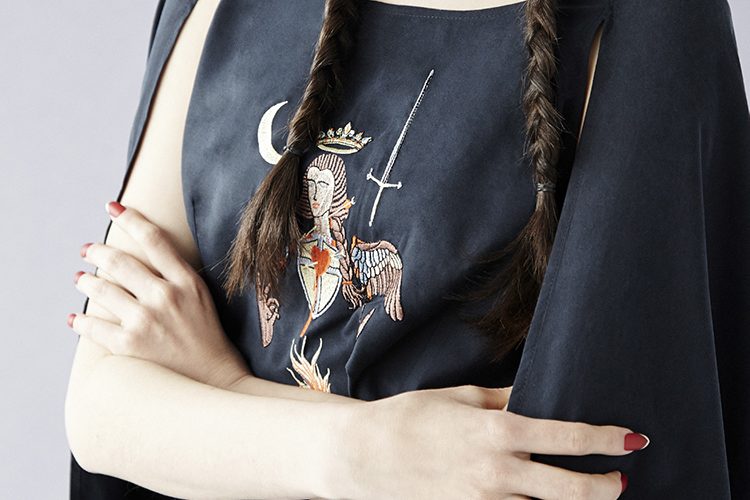
Samantha Pleet: You can see my love of history in the way I name my pieces, they are inspired by legends, myths, and historical figures. For my Fall 14 collection, I drew inspiration from Joan of Arc, even creating a short film to bring the story to life. The silhouettes in that collection echoed armor, and we incorporated Joan of Arc embroidery as a nod to her legacy. But beyond the historical references, I want people to feel like they’re stepping into a story when they wear my designs. Fashion should make you feel like the heroine, or hero of your own adventure. That was also the season I first introduced our beloved Illuminated Print.
Lauren Jane: Fashion often serves as armor for self-expression. What is one piece in your collection that feels most like armor to you?
Samantha Pleet: The Shield Corset, not only does it have the silhouette of armor, but it also feels powerful when worn, it accentuates and protects the form. I love pairing it with matching pants as my interpretation of a suit, or sometimes with long gloves for an even more dramatic effect. There’s something magical about the way it all comes together. It makes you feel ready to step into the world even if your fairy tale for the night is a gallery opening instead of a duel.
Lauren Jane: There’s an undeniable sense of storytelling in your collections—from Persephone’s journey through the underworld to Arcadian dreamscapes. How do literature, folklore, and mythology shape your creative process?
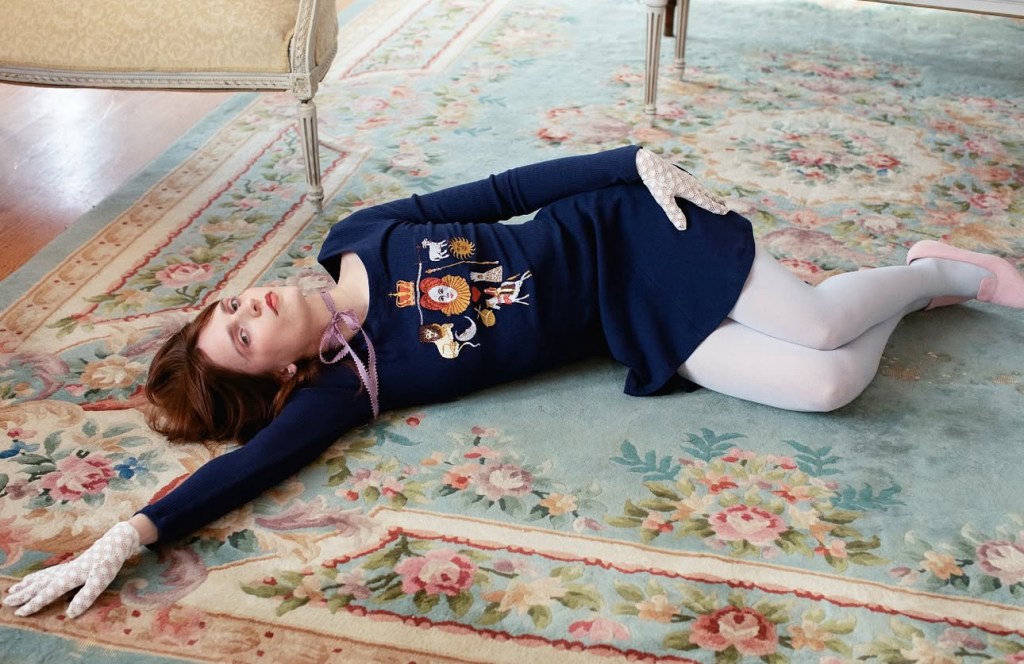
Samantha Pleet: Storytelling is at the heart of everything I create. I need a reason and a passion behind each piece. My Persephone collection felt particularly epic, it embodied the balance of light and darkness that I think makes any design compelling. Right now, I’m preparing to re-release my Elizabeth collection, inspired by Queen Elizabeth ! who is such a fascinating, complex character. The embroidery in that collection is something I imagine she might have worn herself! I love thinking about what these historical figures would wear in a parallel, modern day universe.
Lauren Jane: If you could step into any painting or literary world and design garments for its characters, where would you find yourself, and what would you create?
Samantha Pleet: An obvious one for me is Midsummer’s Night’s Dream. I can just imagine all the magical clothing I could design for the characters to run around an enchanted forest and fall in love in, I have always wanted to do a short film inspired by this.
Lauren Jane: From rosettes to ribbons, texture plays such a role in your designs. Are there any historical garment techniques, silhouettes, or forgotten crafts you dream of reviving that you haven’t already?
Samantha Pleet: There are so many techniques I’d love to explore further! I’d like to try beading and the idea of creating custom jacquards has intrigued me.
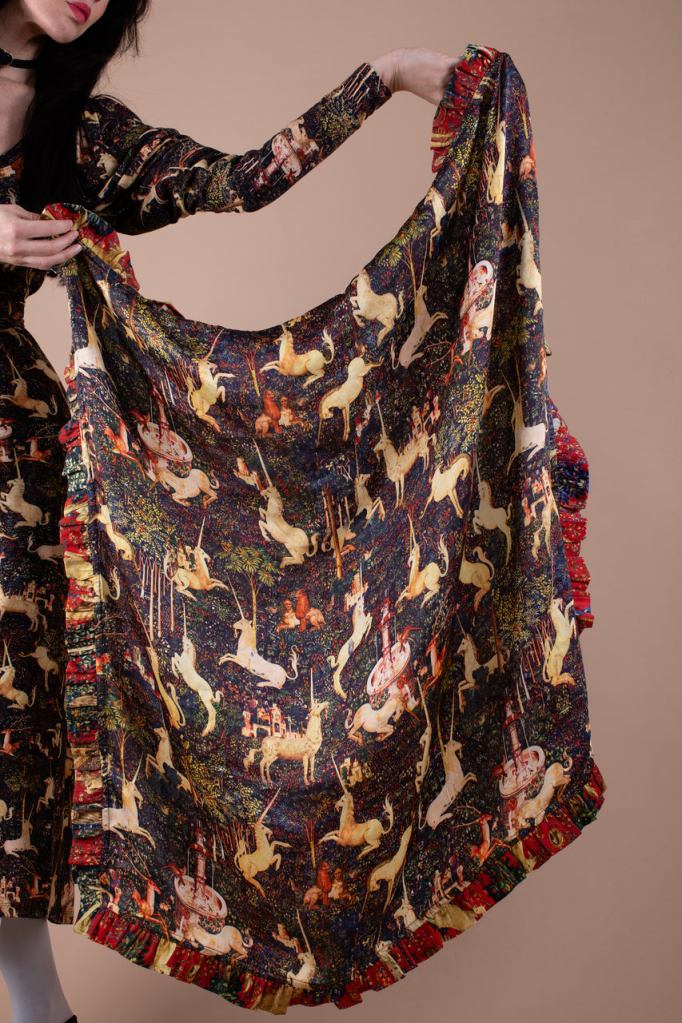
One of my favorite explorations of historical craft is my Unicorn Tapestry print, that’s what I’d like to do in a jacquard. I designed the print based on the famous medieval tapestries but removed the people so the unicorns could be truly free. I loved the idea of taking something so iconic and slightly altering the narrative letting the unicorns exist in their own world. It’s this kind of storytelling through fabric that excites me.
Lauren Jane: Magic is at the heart of your brand. What does magic mean to you in the context of fashion, and how do you spin it into every collection?
Samantha Pleet: I get a visual image that appears in my mind, and it takes me on a magical journey, becoming something you never imagined. What you have in the end, that is magic. what takes shape after playing around with color, silhouette, technique, and fabric and how it all comes together on the form. It’s an emergent quality where the process leads to the magical result.
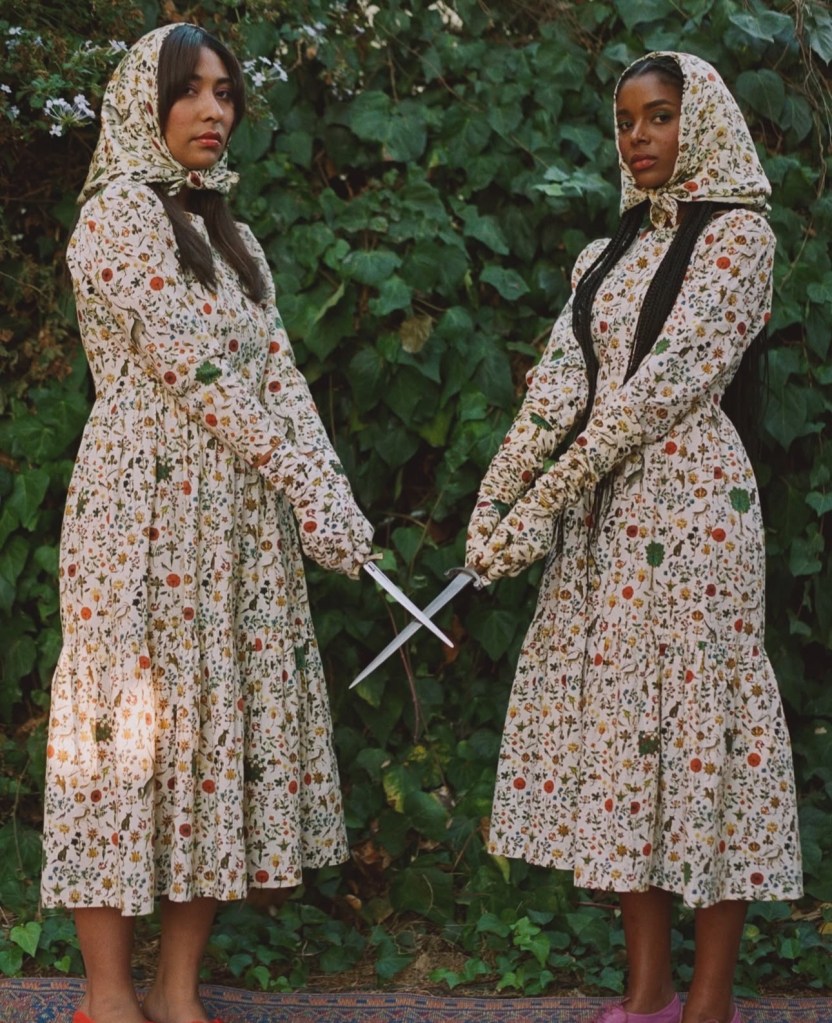
After all, we all wish to feel like the free unicorn from the tapestry—untethered, ethereal, and part of a story larger than ourselves. Samantha Pleet’s designs offer just that: a way to step into a world where history, myth, and fashion intertwine. Her work proves that clothing is more than fabric; it’s a form of magic, a means of storytelling, and a way to embody the spirit of the past while moving boldly into the future.

 Atelier Lauren Jane